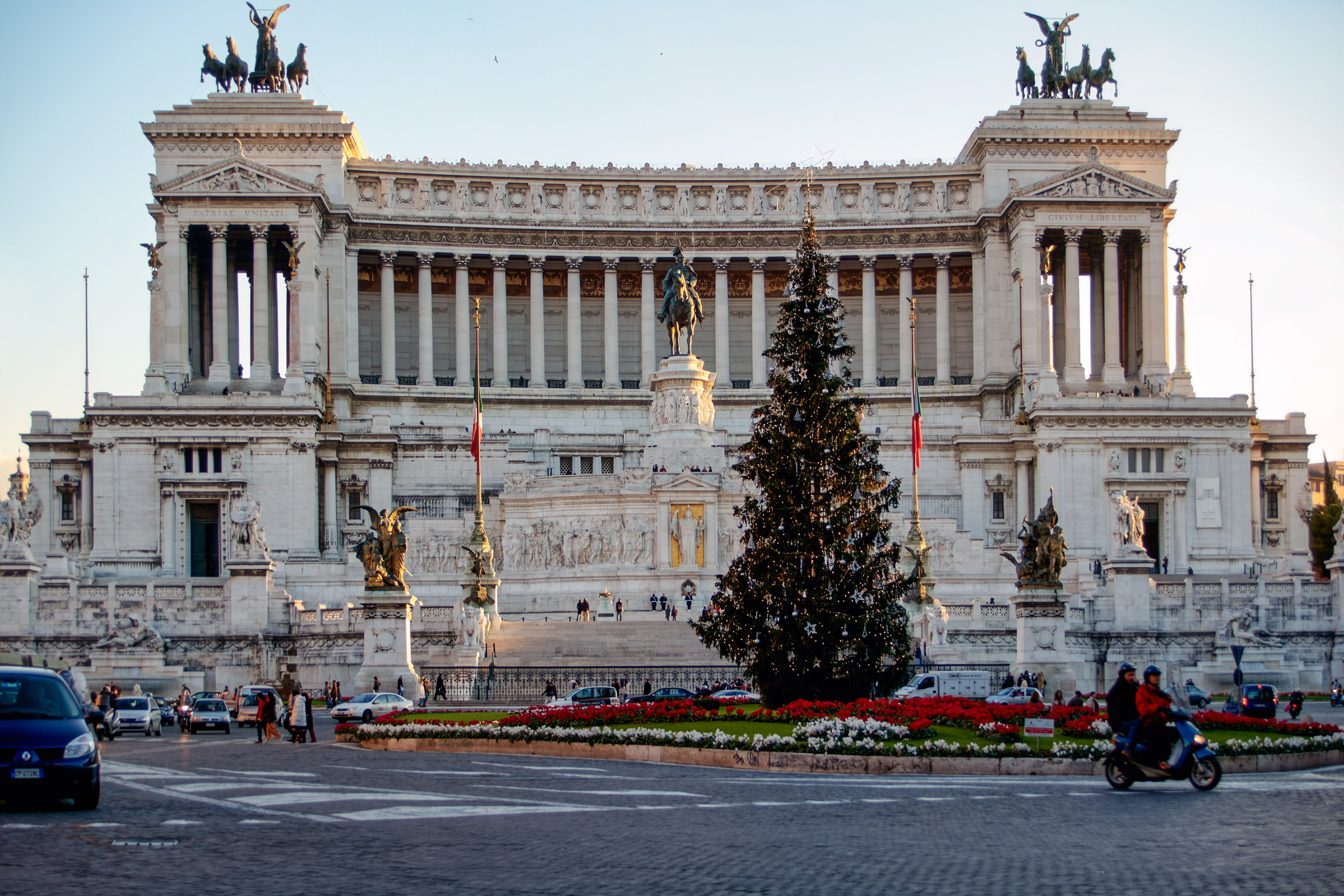
The Vittoriano, an imposing monument that was built in honor of Italian King
Vittorio Emanuele II who achieved Italian unity with Rome as capital in 1870.
Click on any image on this page to see a larger version!
Since we so thoroughly enjoyed our 1999 Christmas in New York and 2002 Christmas in London trips, we decided that it was time for another Christmas in a major city, and for 2004 we chose Rome. Strictly speaking, we did not spend Christmas in Rome since we arrived in the Eternal City on December 20 and left late on Christmas Eve, but this is really a technicality.
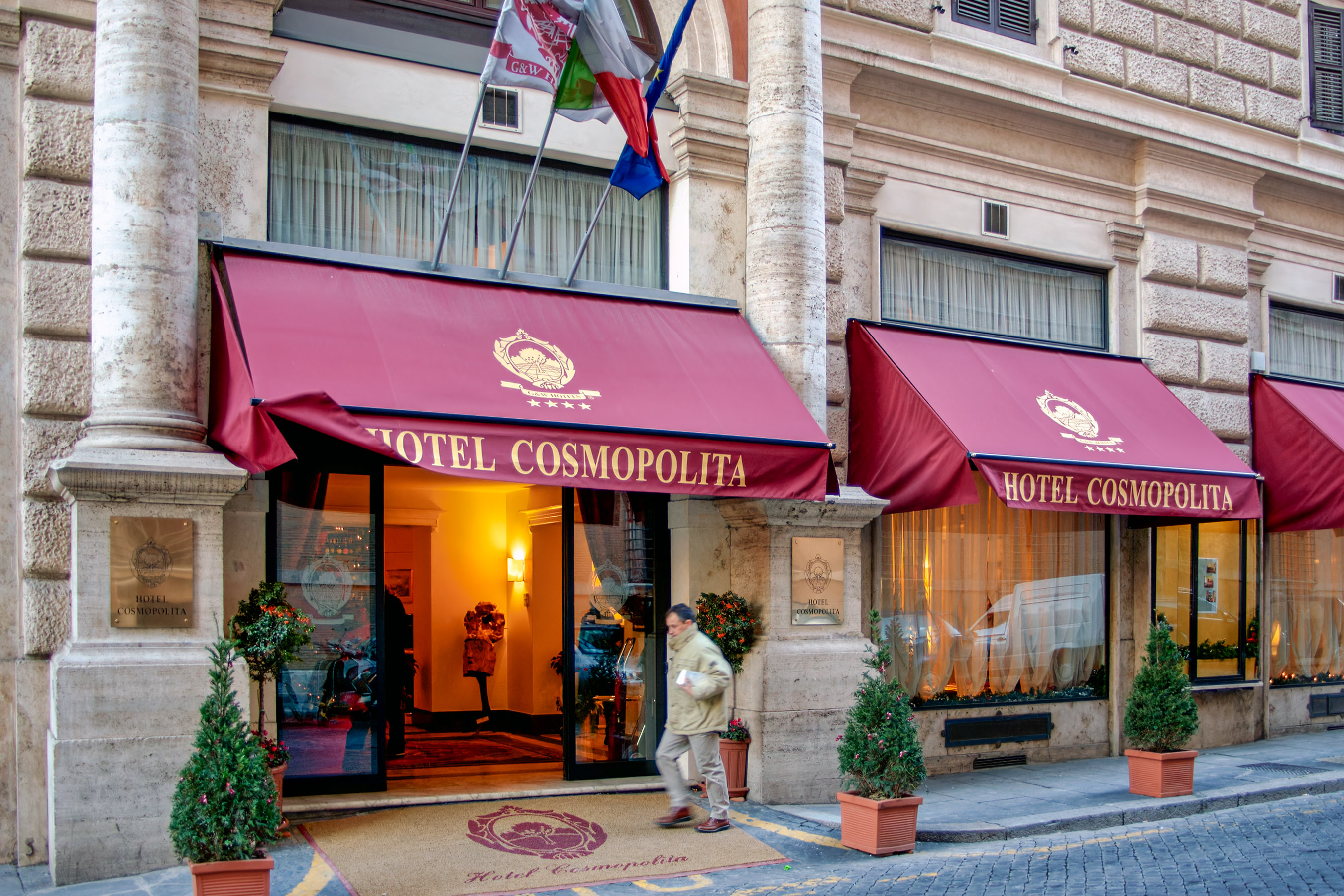
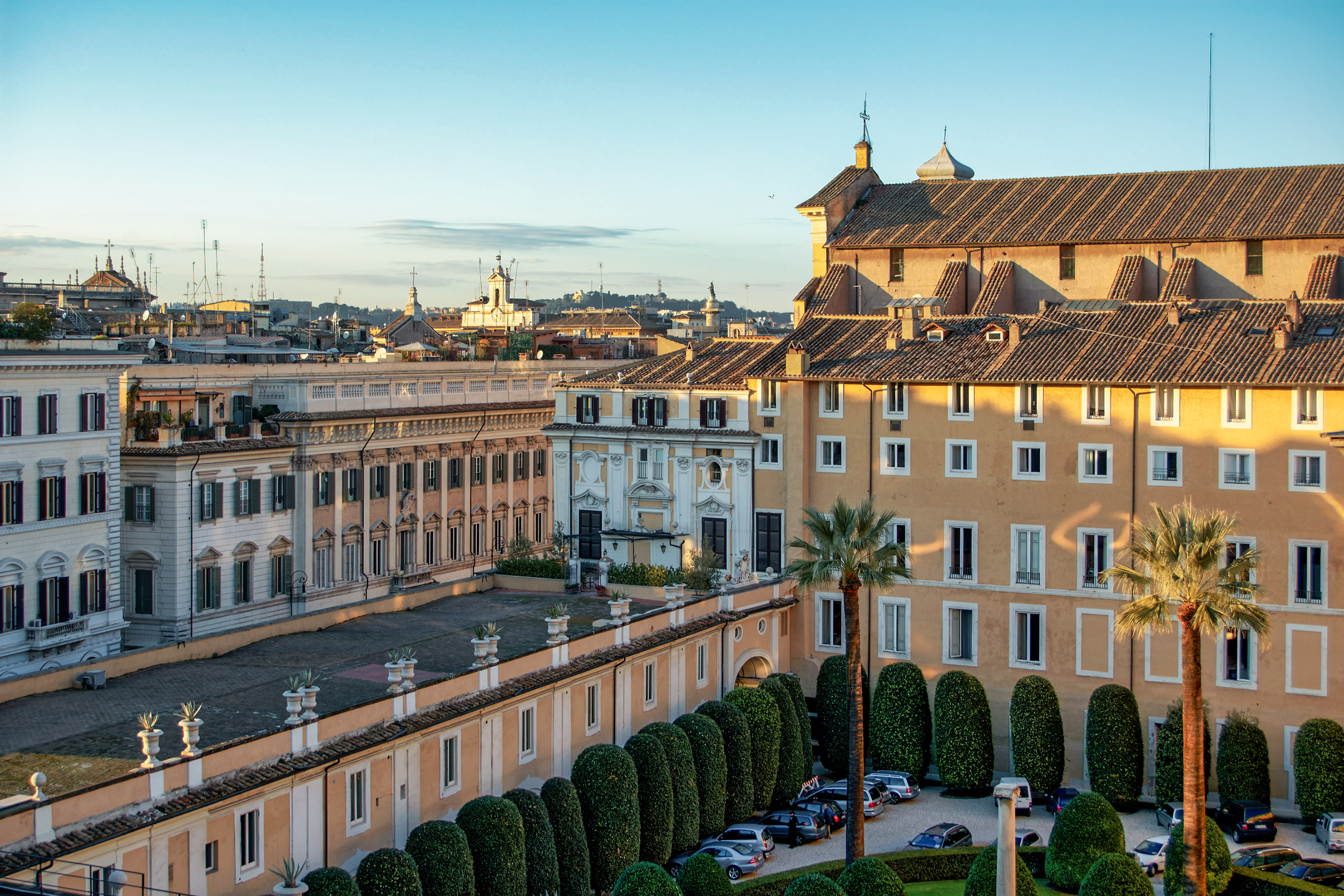
As we had arranged for a car service, we were met at Rome airport and driven to our hotel [1], the Cosmopolita. We chose this hotel because of its location: in walking distance to every place we wanted to visit. We unpacked our bags, admired the view from our window [2], and left in search of a place to have lunch. We found a small restaurant near the forum; in this photo David is shown waiting for the food [3].
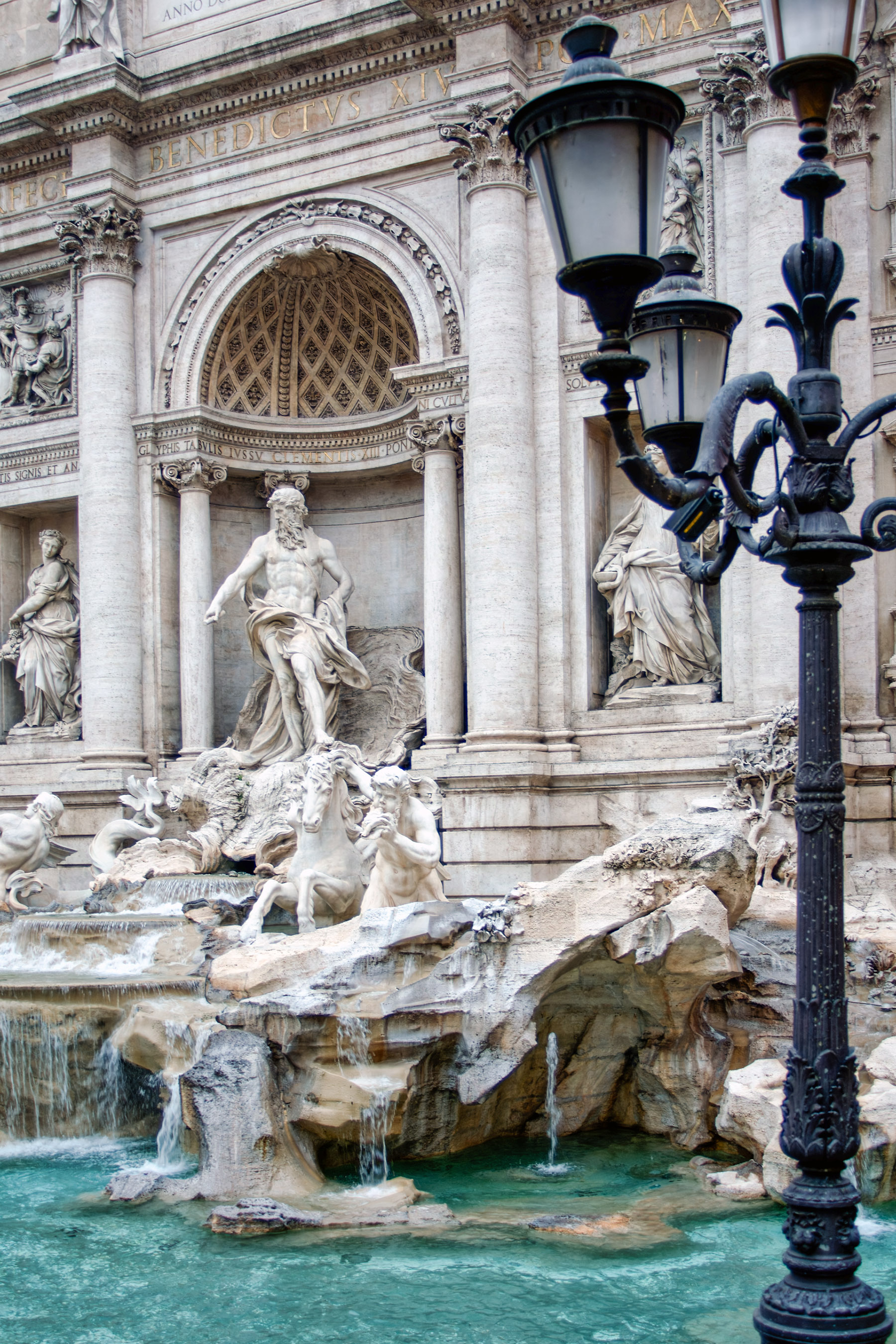
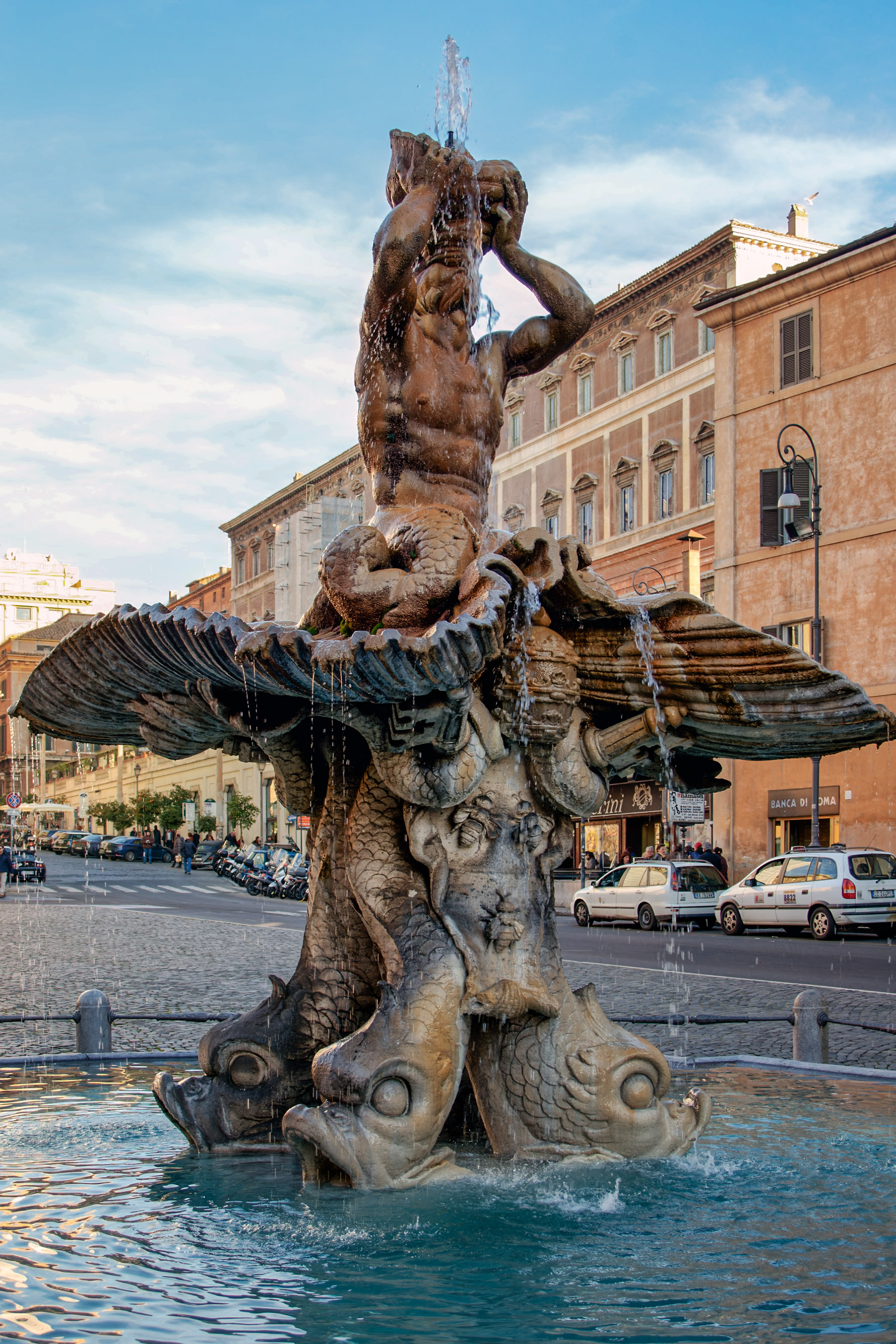
Our tour of Rome started right after lunch when we spent some time at the Trevi Fountain [4], [5]. It is perhaps the most famous of all Roman fountains, and the legend says that if one throws in a coin, one will some day return to Rome. Daniel threw a coin into the Trevi fountain in 1972, and it took him 32 years to get back. Perhaps it is faster without a coin throw, something that can now be tested empirically. Another wonderful fountain is Bernini's Triton fountain [6] located in the Piazza Barberini.
|
|
Our hotel near the Piazza Venezia |
The view from our window |

|

|
David |
The Trevi Fountain |
|
|
The Trevi Fountain |
The Triton Fountain |
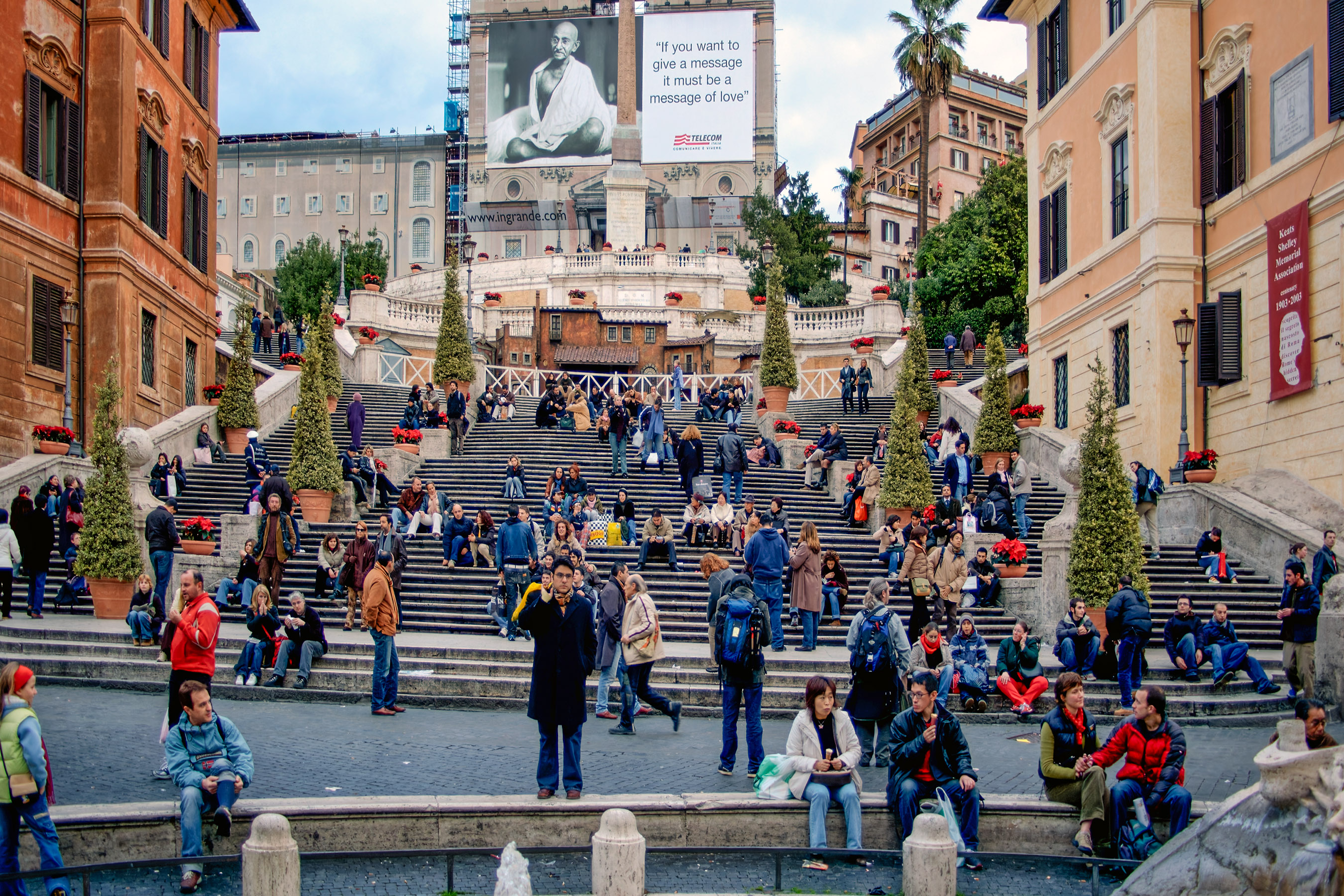
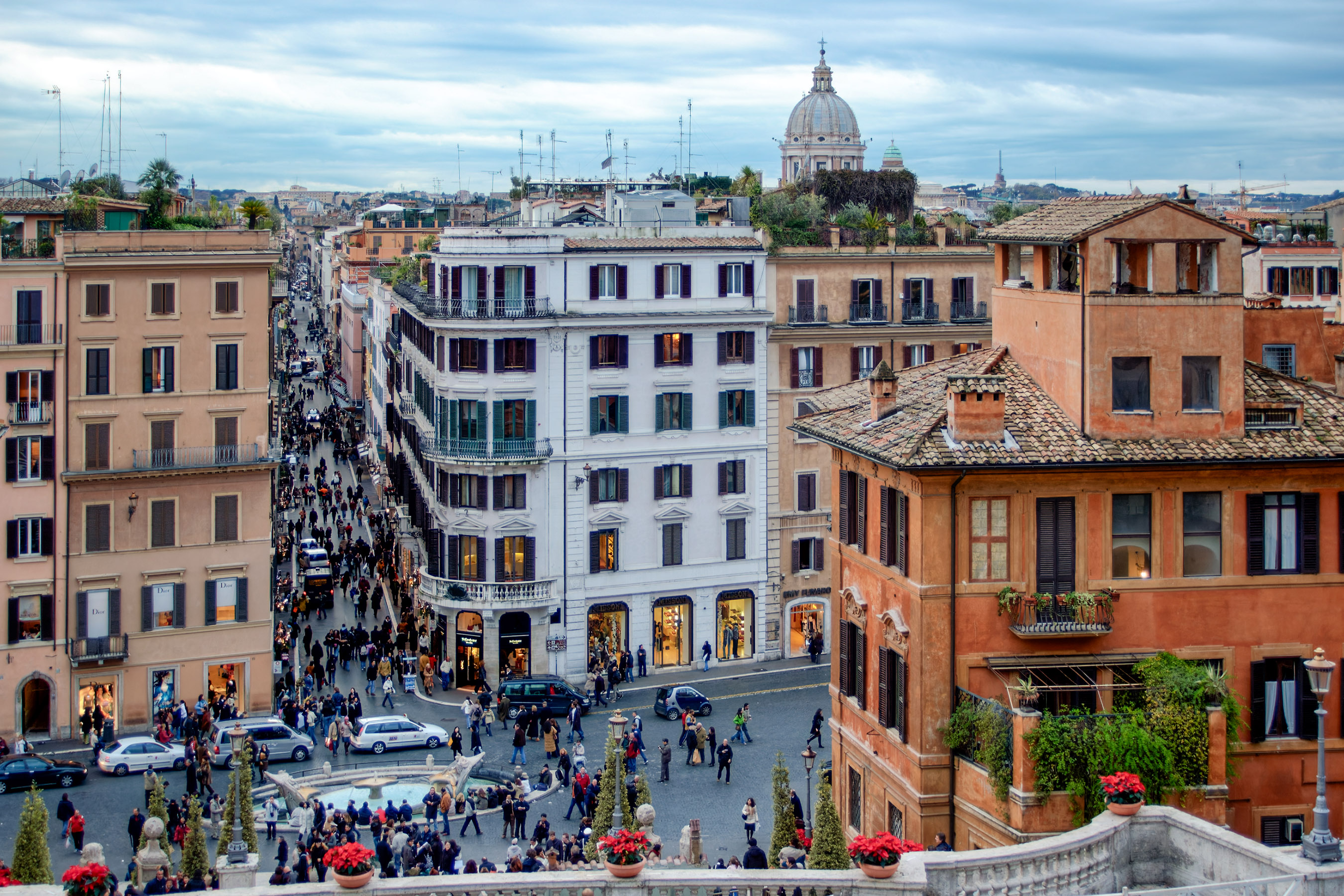
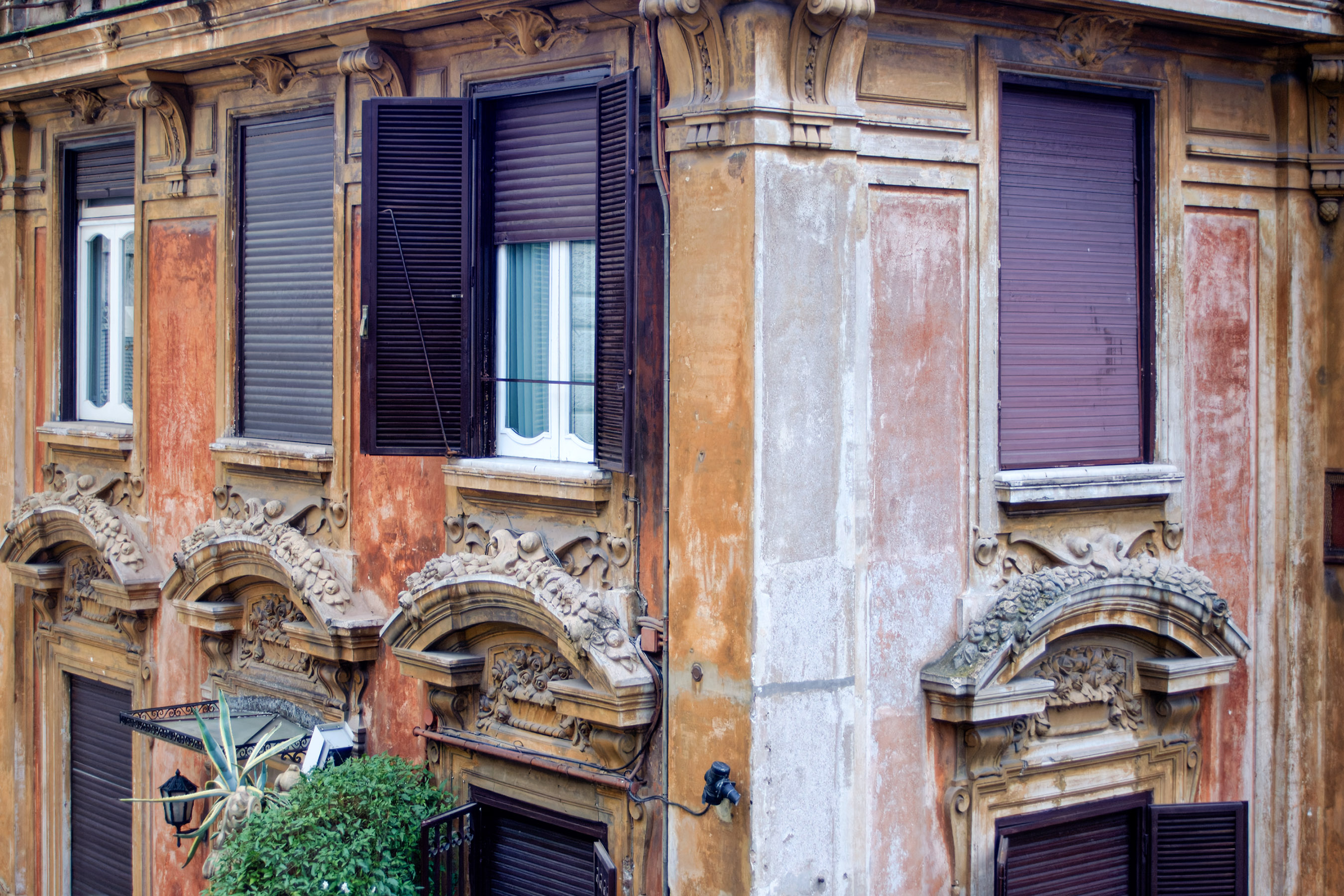
For our last stop that day, we chose to visit the Spanish Steps [7] at the Piazza di Spagna [8]. The Spanish steps and piazza are named after the Spanish Embassy to the Holy See, which is still located in the square. But one does not always have to seek famous spots: in Rome, picturesque sights, like this weathered facade [9] that has definitely seen better days or this vibrantly colorful street scene [10] may be found around almost every corner.
|
|
The Spanish Steps |
Piazza di Spagna |
|

|
View from the steps |
Street scene |
The next morning, under deep blue skies, we walked across the Tiber river to the Vatican. Even from a distance, the truly enormous Saint Peter Basilica [11] inspires awe. In front of it, the Piazza San Pietro is framed by two colonnades like this one [12]. Inside, the church overwhelms with its incredible display of art. Sadly, Michelangelo's Pietà [13] is displayed behind thick glass because a mentally disturbed tourist damaged it severely in the 1970s. This makes it very tricky to get decent photographs of this magnificent sculpture. There are no paintings in the basilica; everything that looks like a painting is, in fact, a mosaic, but with the distance, this is not obvious at all [14]. There are countless sculptures, like this one of Saint Juliana Falconieri [15] or Saint Peter of Alcantara [16].
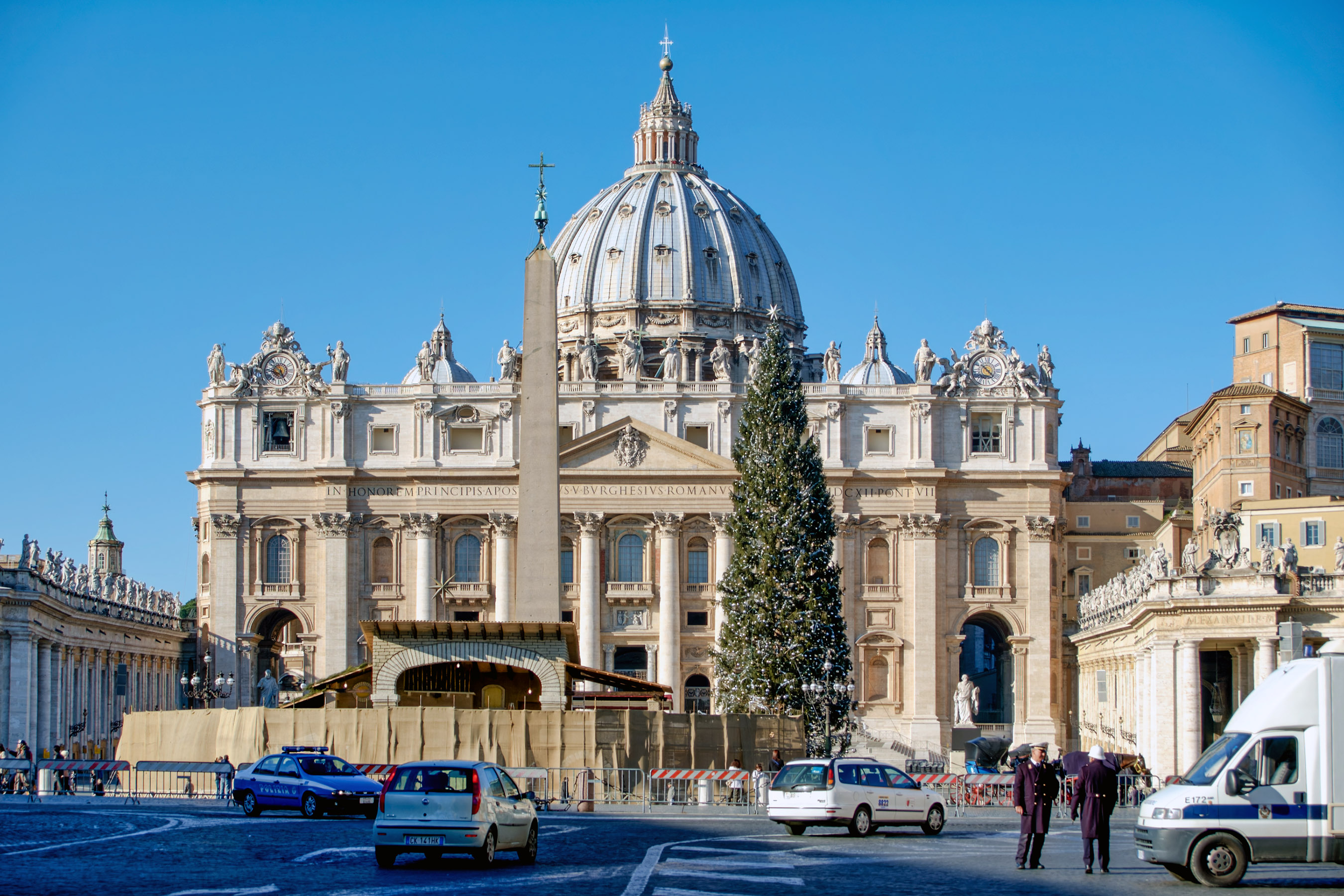
|
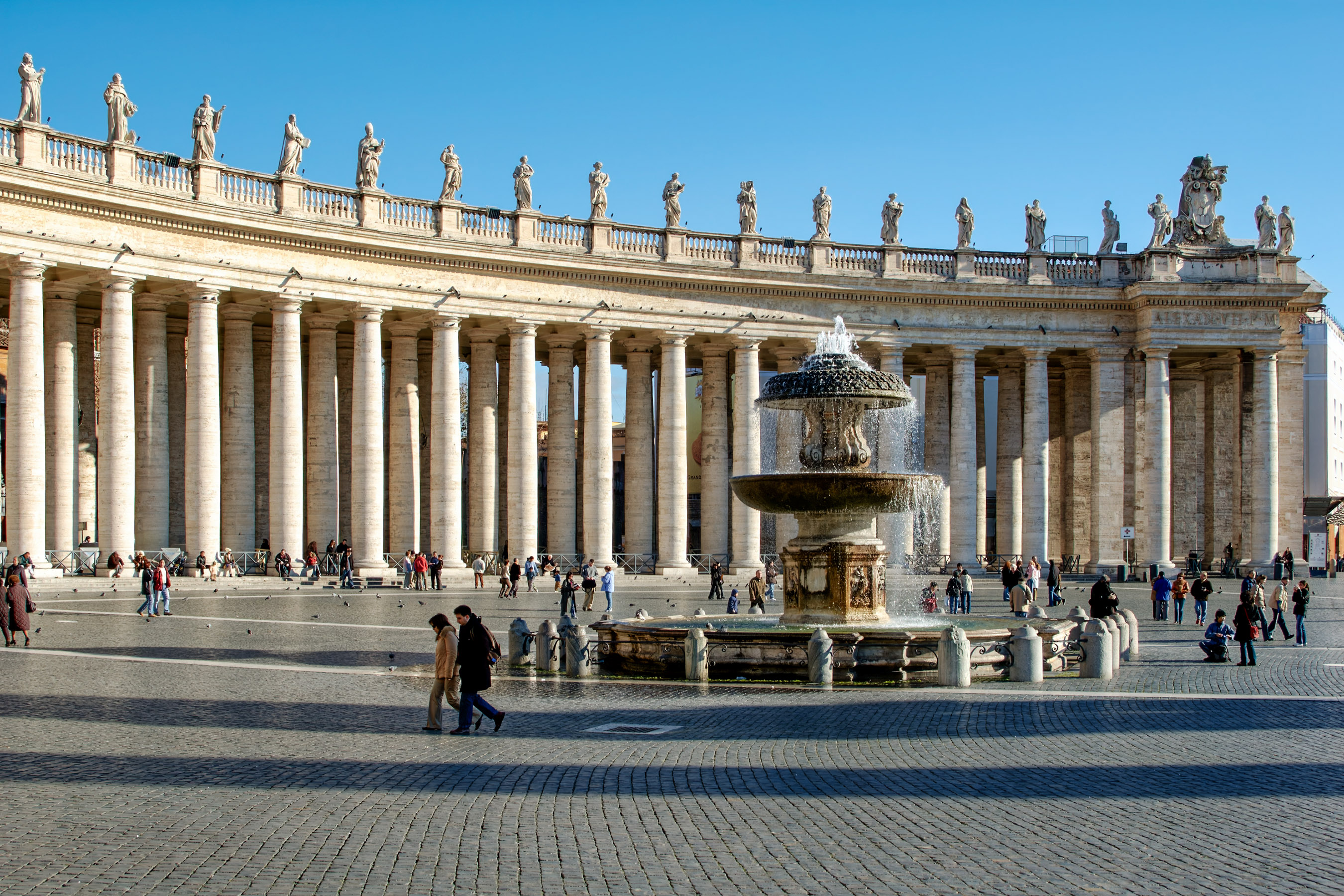
|
The Vatican: Saint Peter's |
Piazza San Pietro |

|
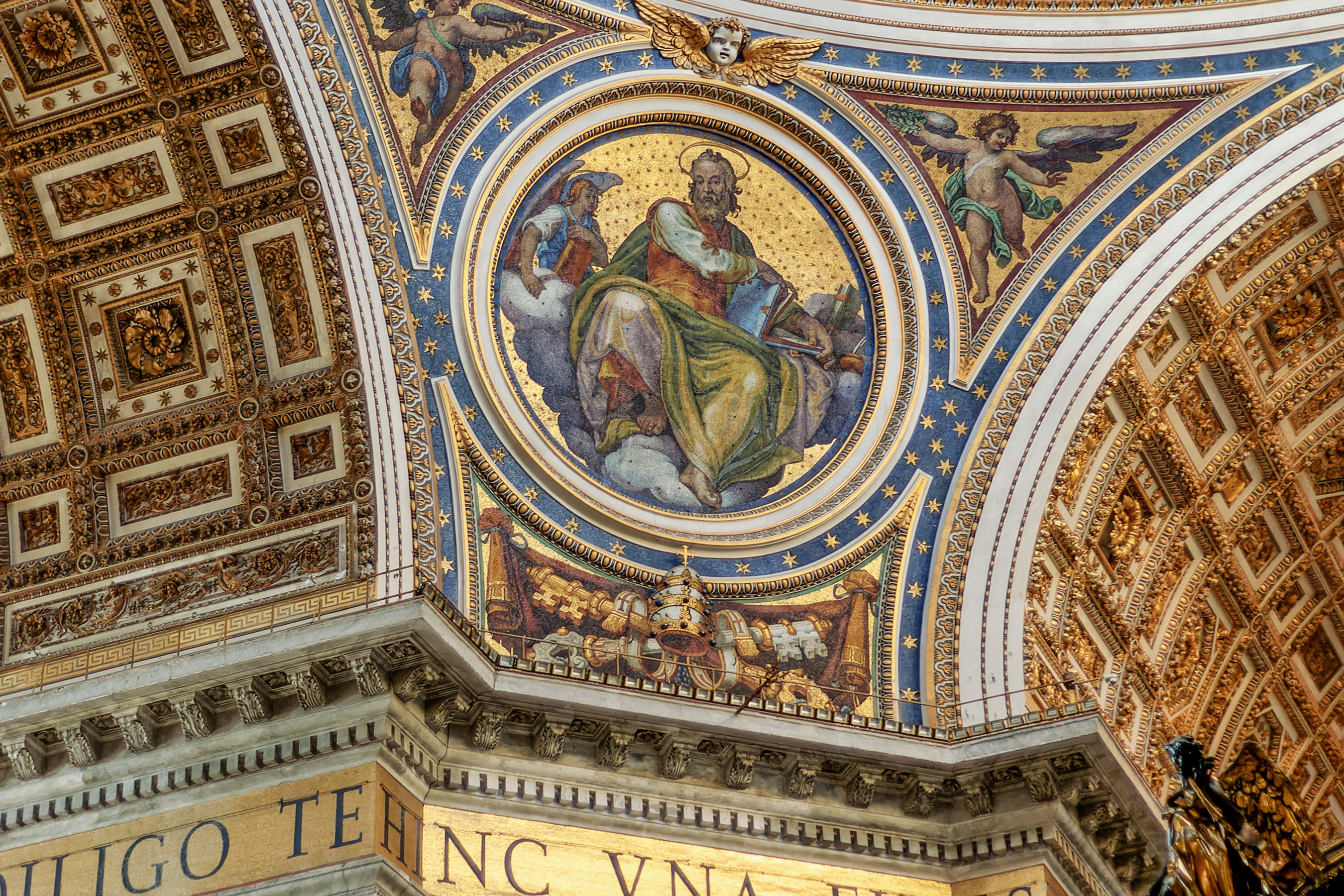
|
La pietà |
Detail of the ceiling |

|
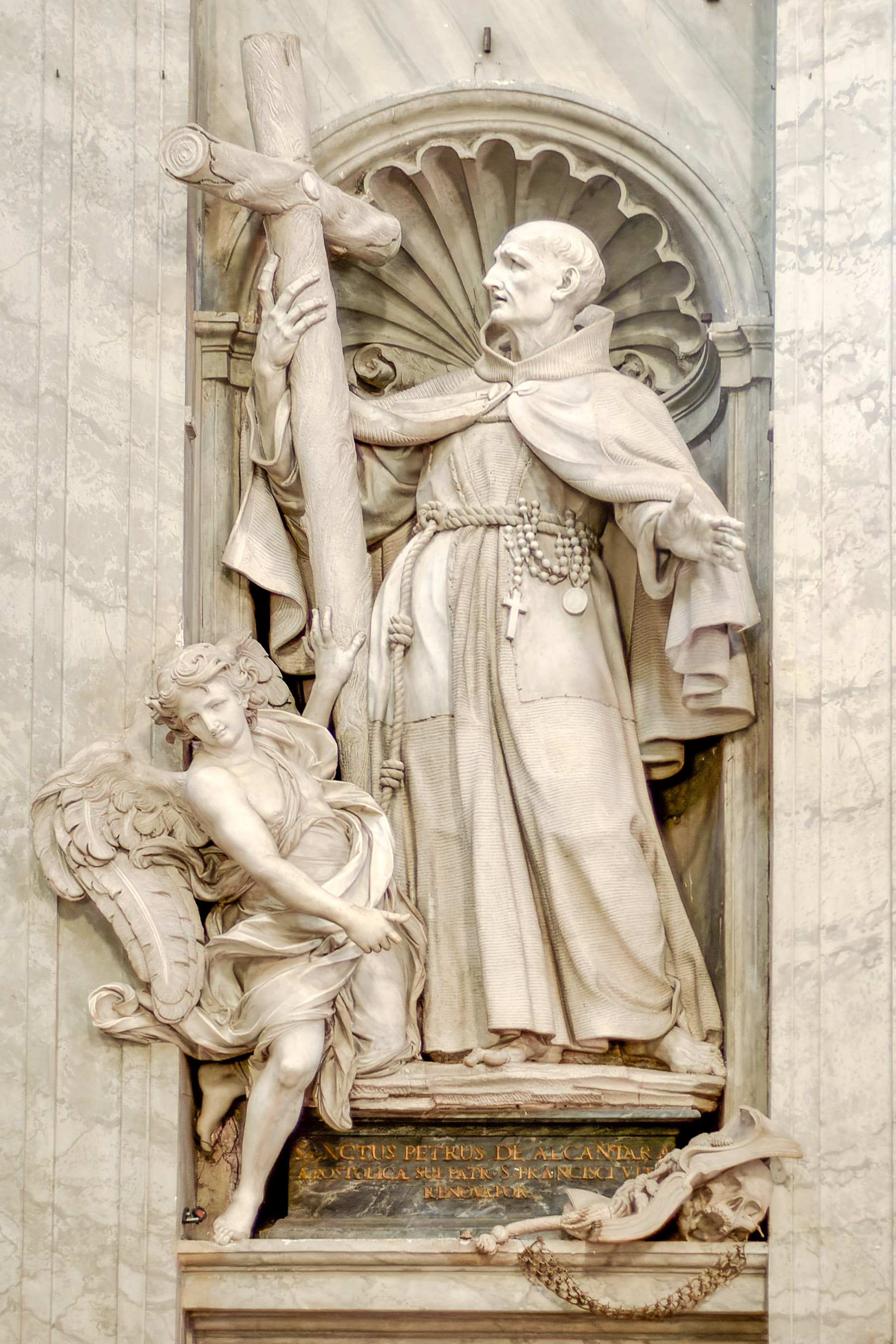
|
Saint Juliana Falconieri |
Saint Peter of Alcantara |
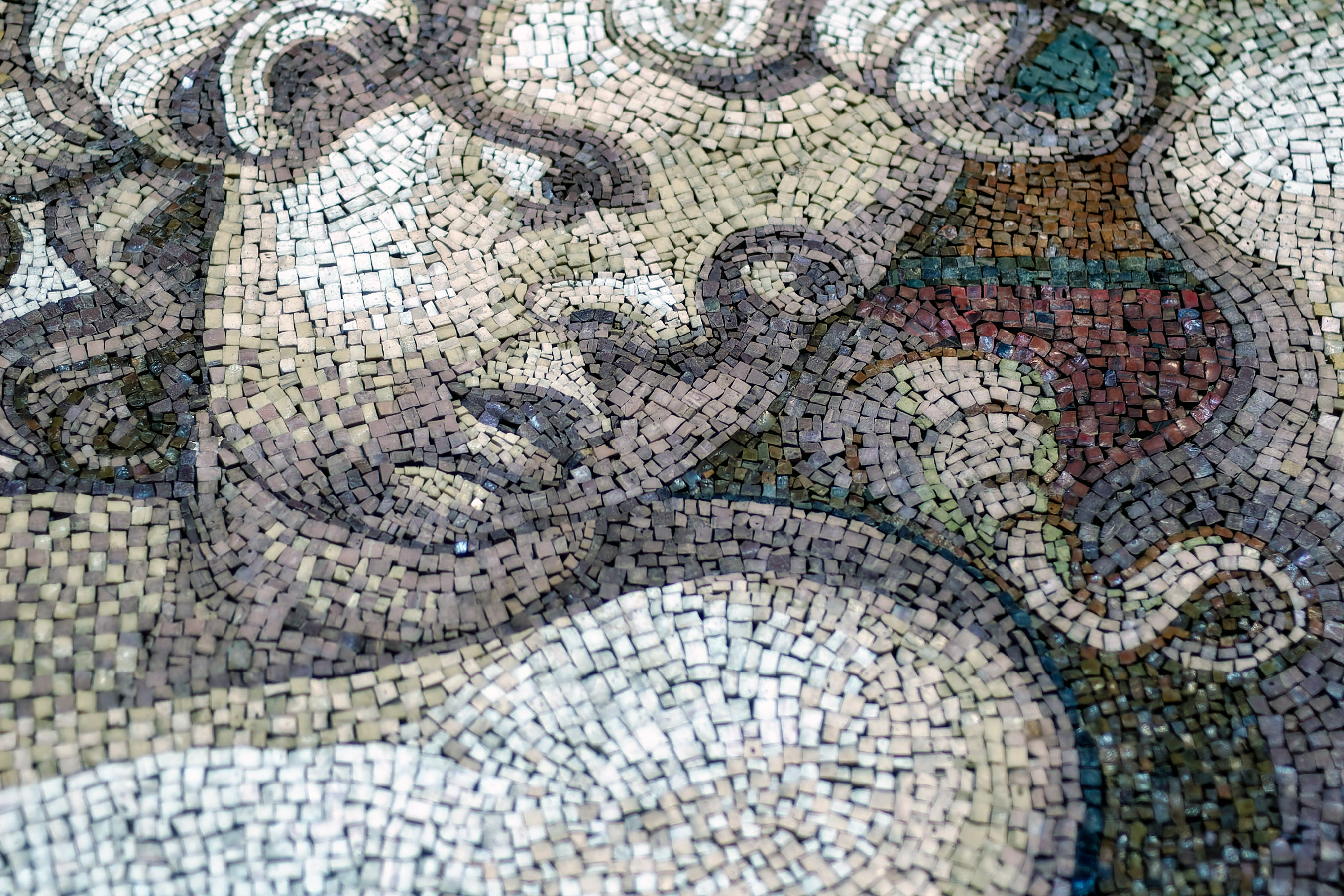
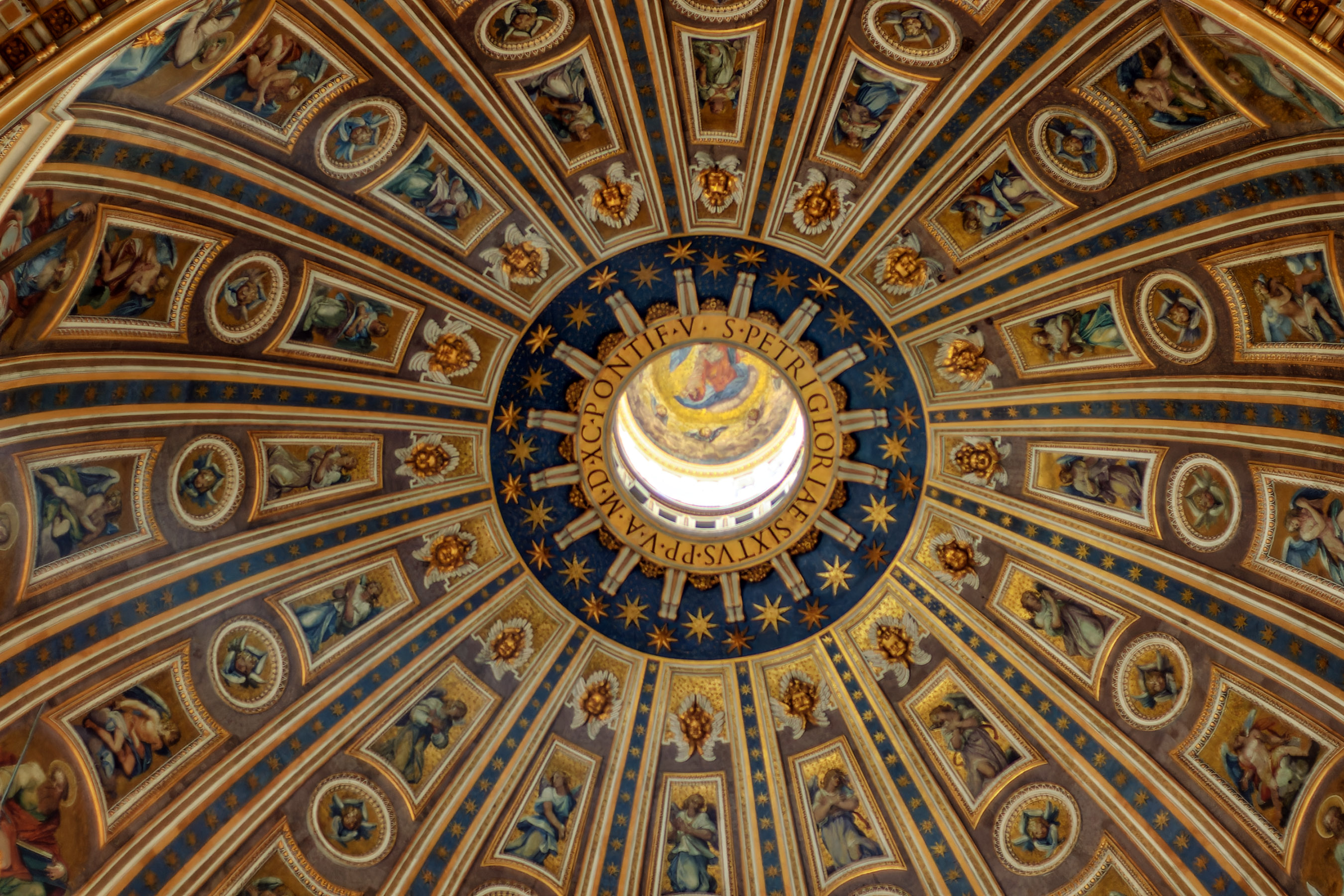
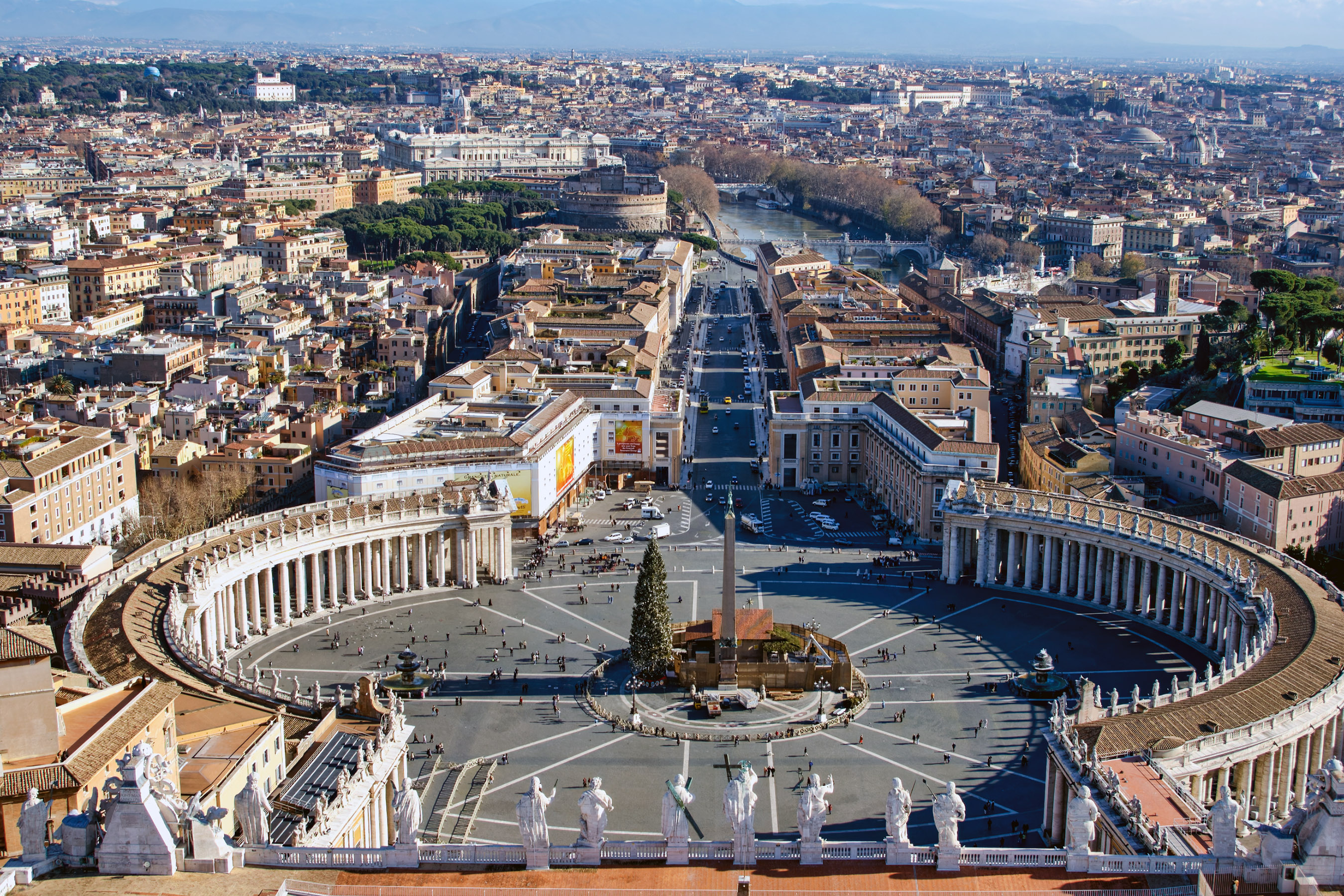
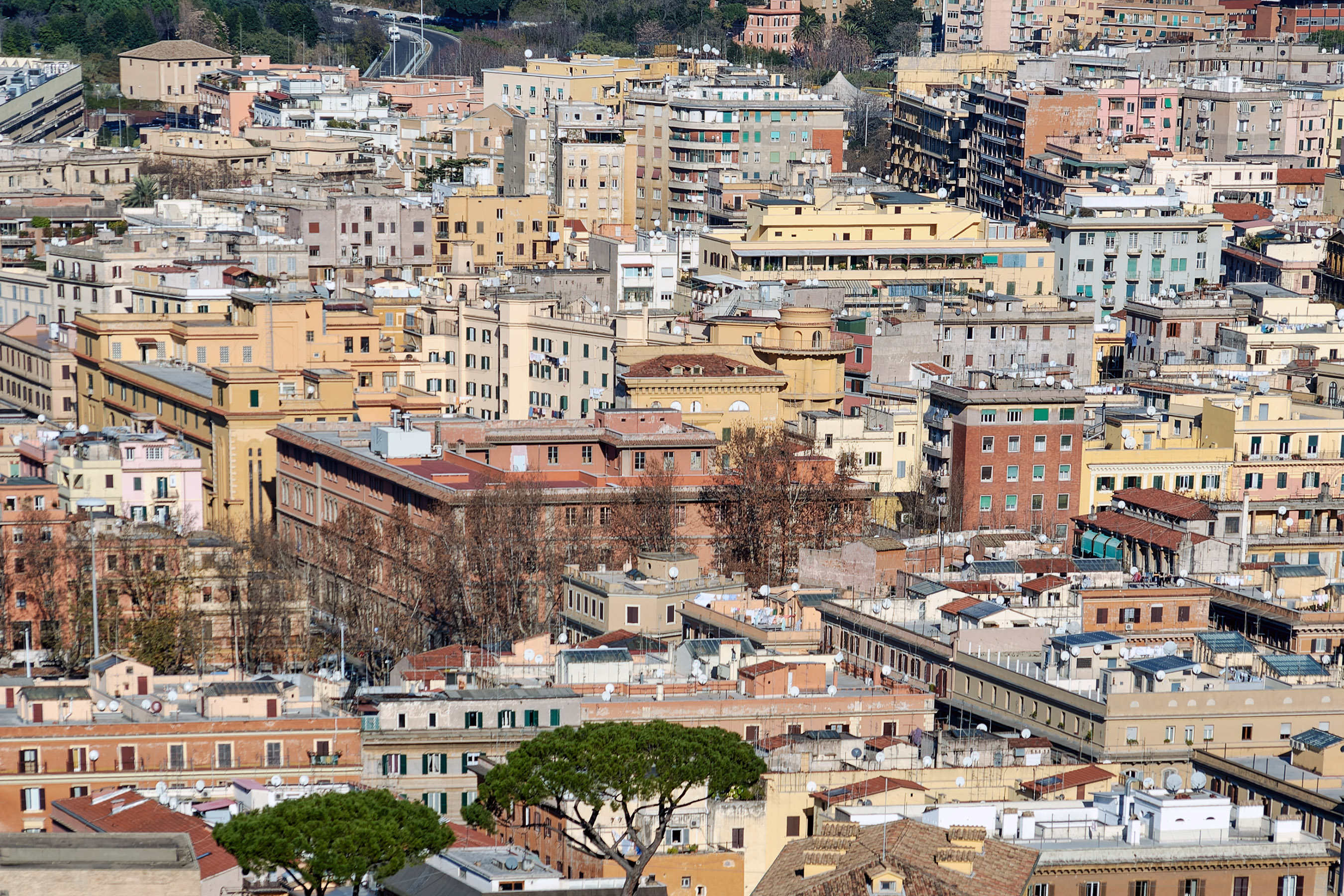
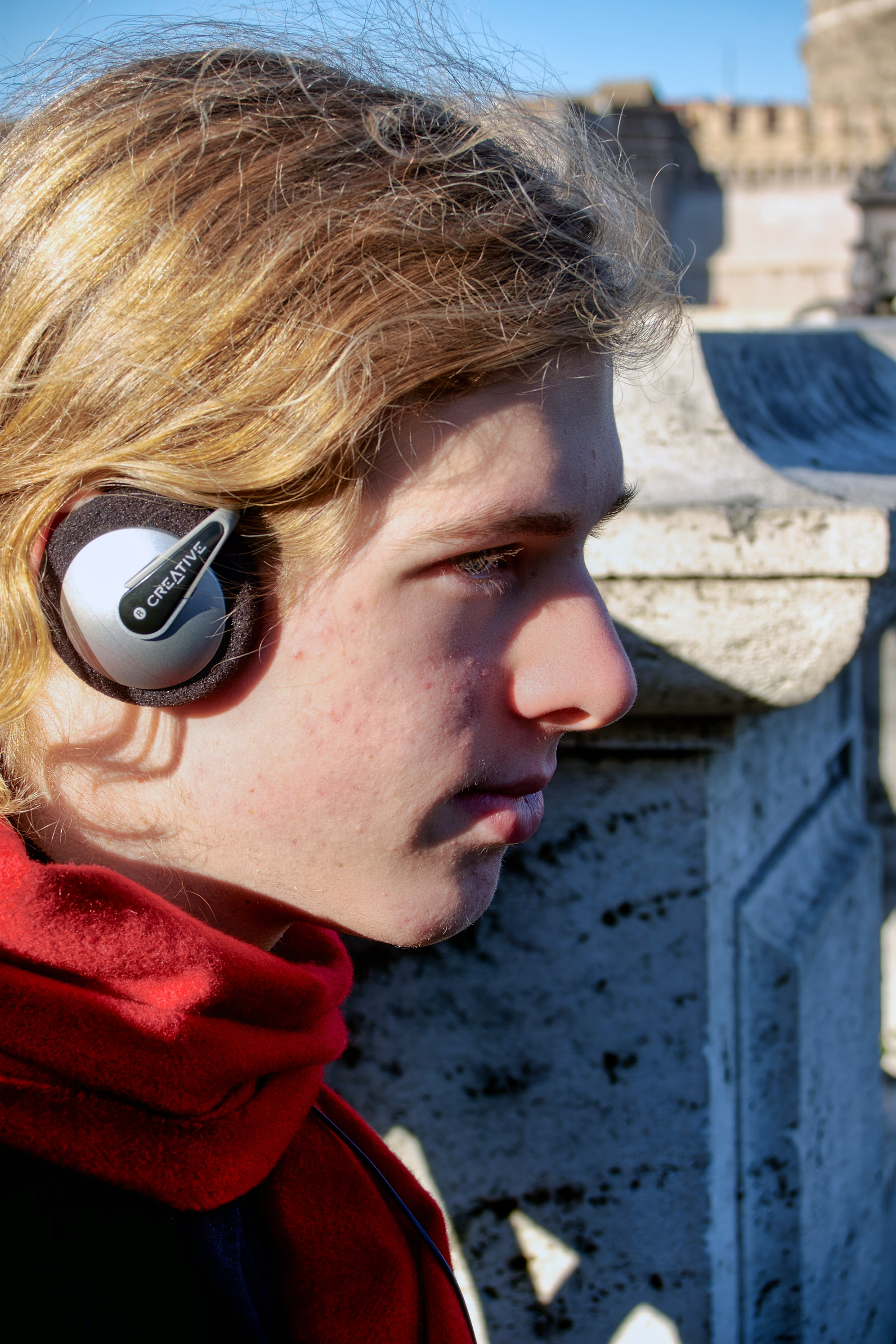
When one climbs up to the dome, it is possible to stop at the main roof level and view the inside of the dome's base. From here, it is obvious that we are dealing with mosaics [17], but when looking at the entire inside of the dome, the mind boggles when attempting to estimate the number of little stones necessary to produce this effect [18]. Climbing higher still, one can get to an outside terrace on top of the dome. From there, one has a truly spectacular view of the Piazza San Pietro below and of Rome in general [19], [20]. The outside view is not bad from the main roof level either [21], something Eric could appreciate even while listening to his iPod [22].
|
|
Detail of a mosaic |
The inside of the dome |
|
|
Overlooking the piazza San Pietro |
Another view from the dome |

|
|
On the main roof level |
Eric |
Following our return to ground level, we decided to have lunch in a little place called Caffe S. Anna; the address is Borgo Pio 100. We mention this as a public service to those who might be tempted to eat there as well. In one word: don't! The prices are outrageous, and they are not displayed in a prominent manner, which leads one to believe that they are comparable to those charged in other places. Not true! Just one example: they charge 7.50 euros for one (1) cookie that costs 1 euro in the cafeteria of the Vatican museum. Enough said.
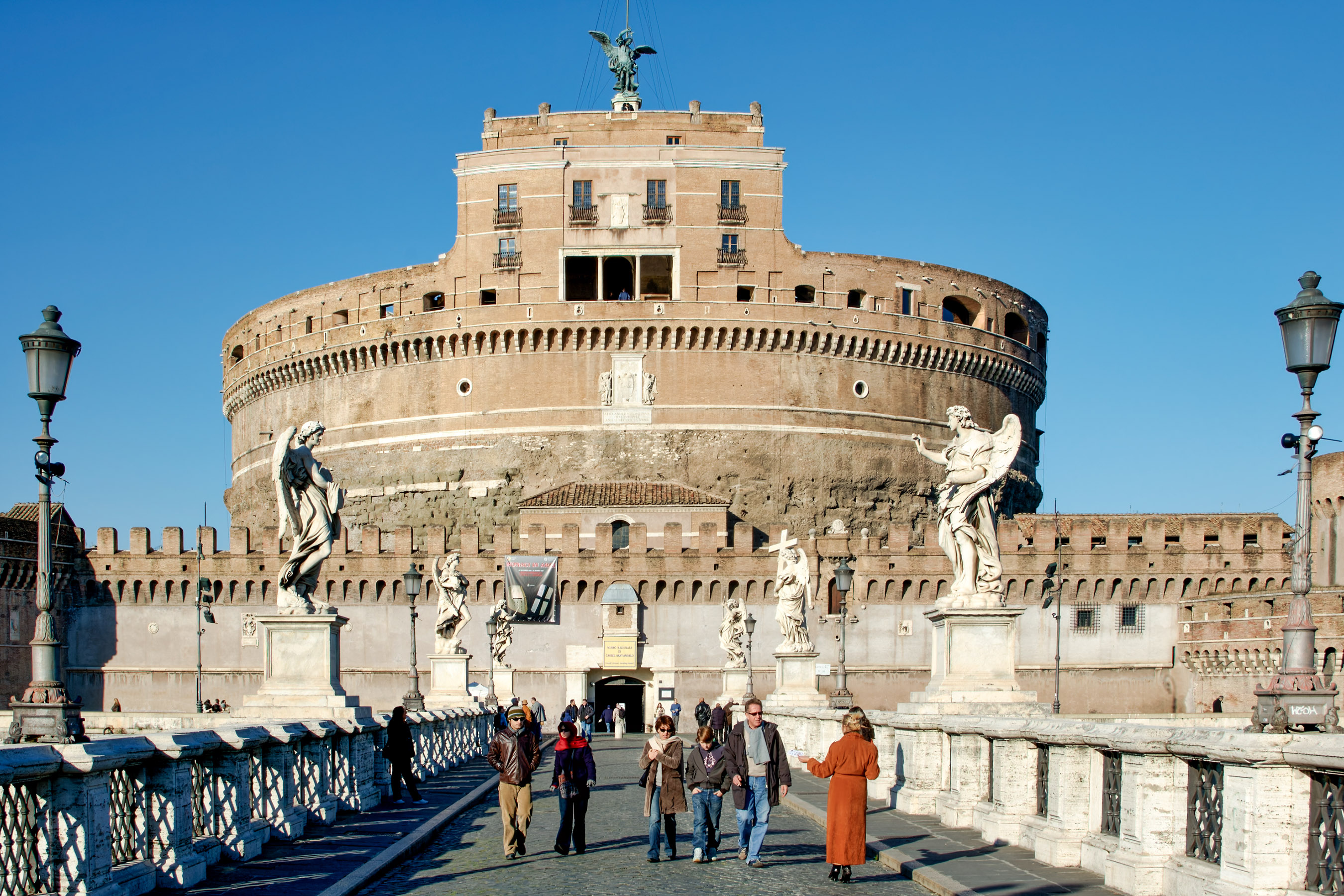
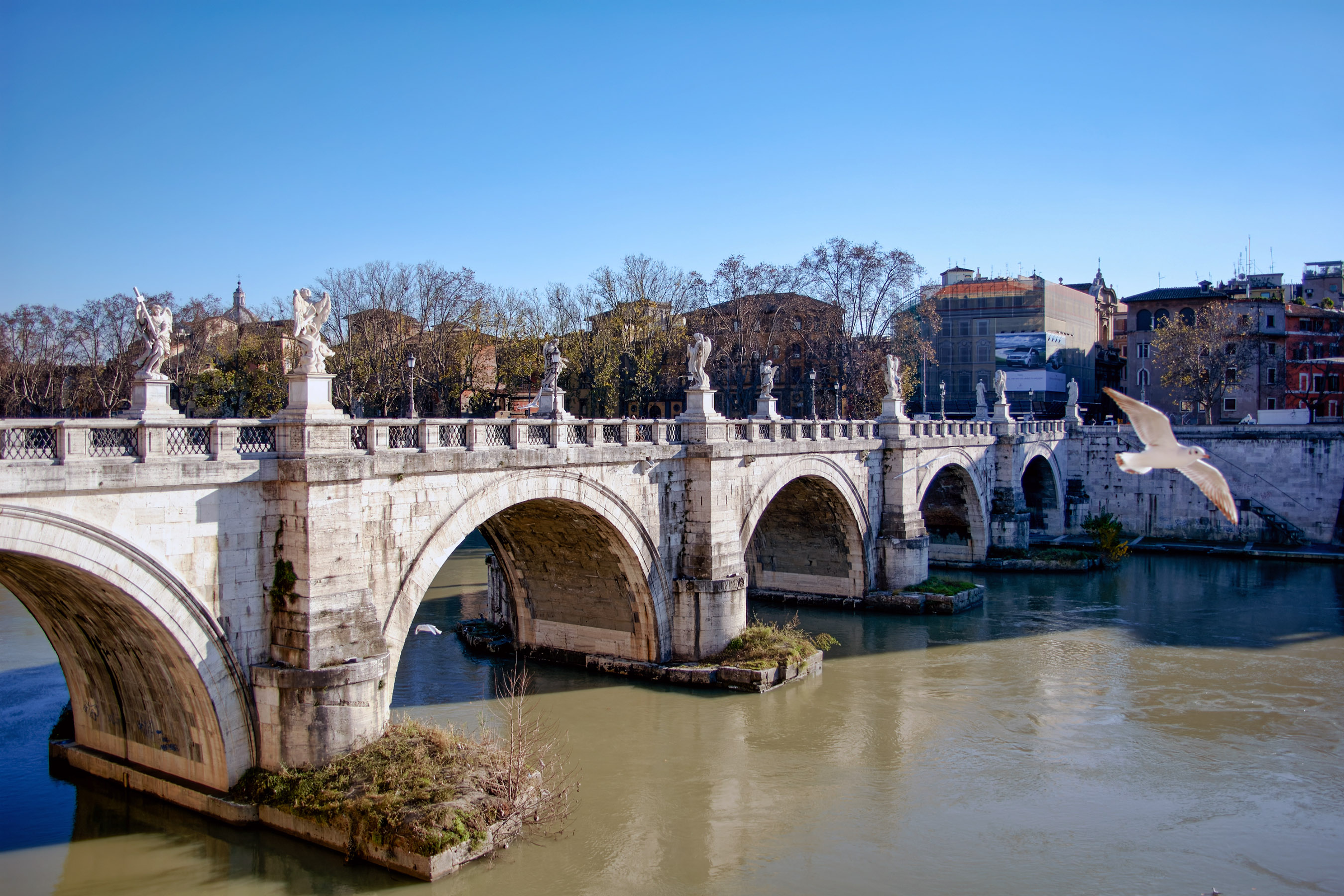
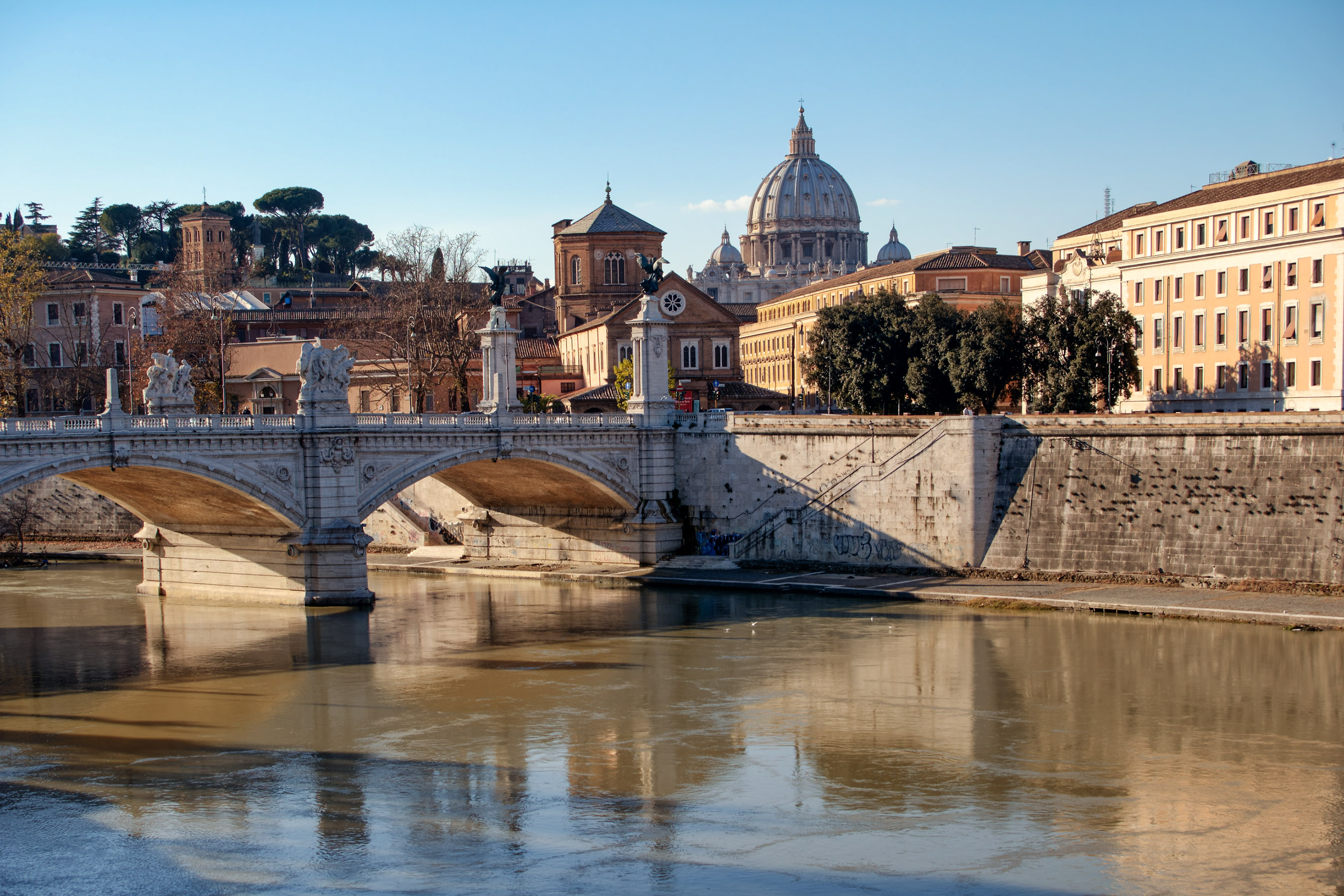
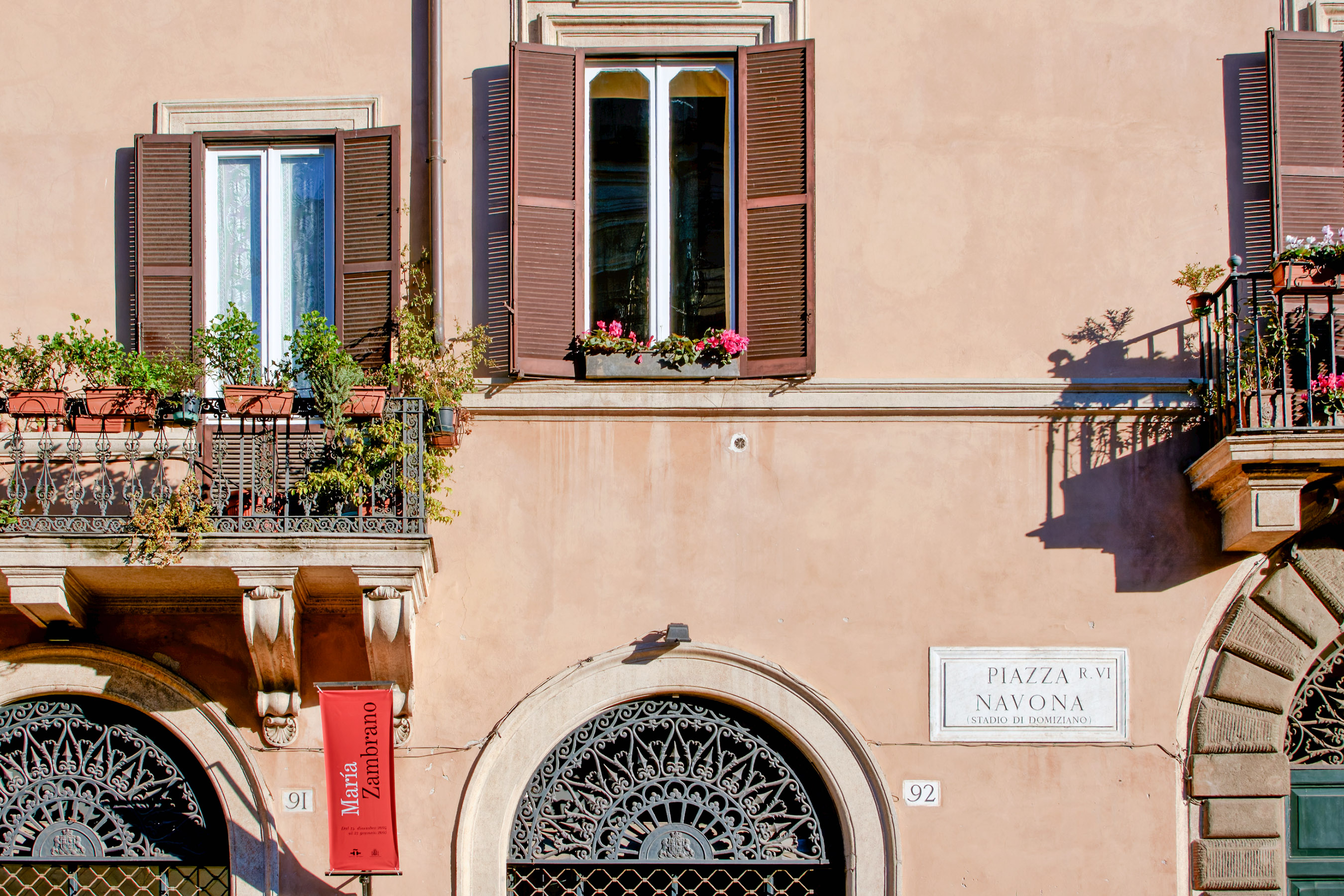
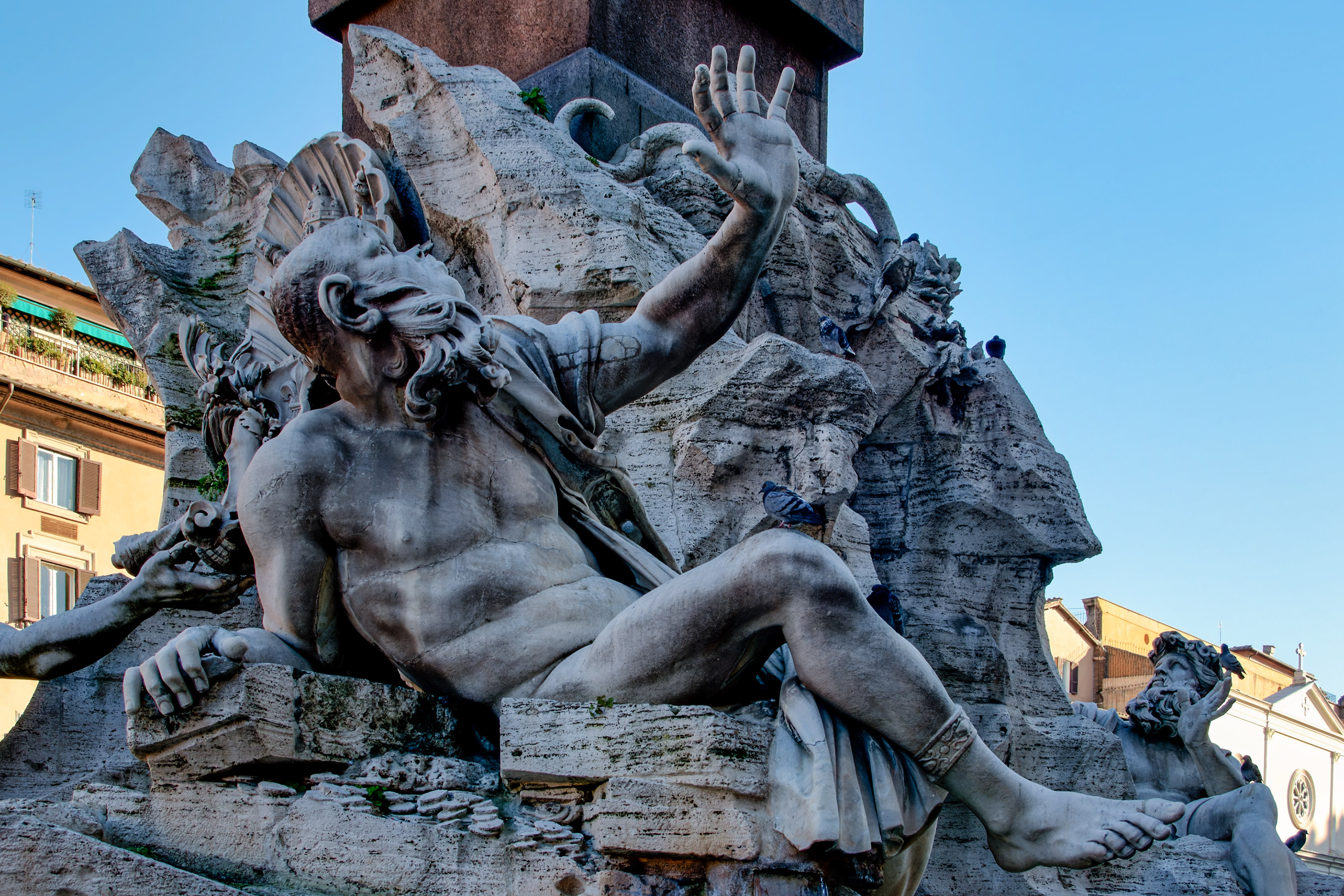
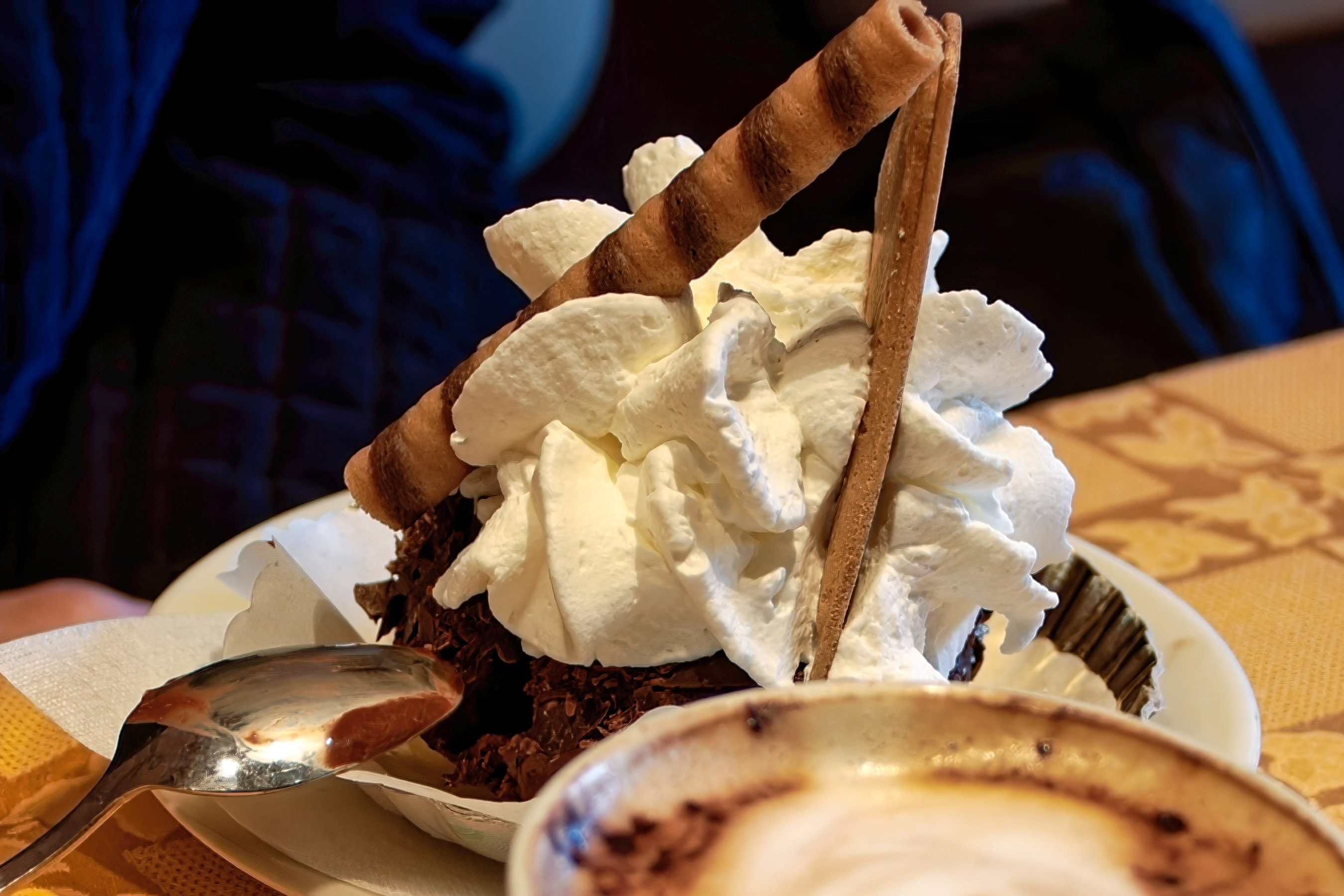
Speaking of the Vatican museum, that was to be our next stop, but we found out to our dismay that they were closed in the afternoon. Therefore, we strolled to the Castel Sant' Angelo [23]. It was built in the second century by the emperor Hadrian as a mausoleum. During the middle ages, it was converted to a fortress, and it also served as a prison before becoming the museum it is today. While the Tiber is not an exceedingly impressive river, the bridges are pretty enough. Shown here are the Ponte Sant' Angelo [24] and the Ponte Vittorio Emanuele II [25] with the Saint Peter Basilica in the background. Next, we walked to the Piazza Navona [26] with its magnificent Fountain of the Four Rivers [27], another Bernini masterpiece. But the real reason to visit the Piazza Navona is, of course, the café and restaurant Tre Scalini, home of the world's best Tartufo (ice cream coated with bittersweet chocolate, cherries, and whipped cream) [28].
|
|
Castel Sant' Angelo |
Ponte Sant' Angelo |
|
|
Ponte Vittorio Emanuele II |
Piazza Navona |
|
|
Fountain of the Four Rivers |
Tartufo at Tre Scalini |
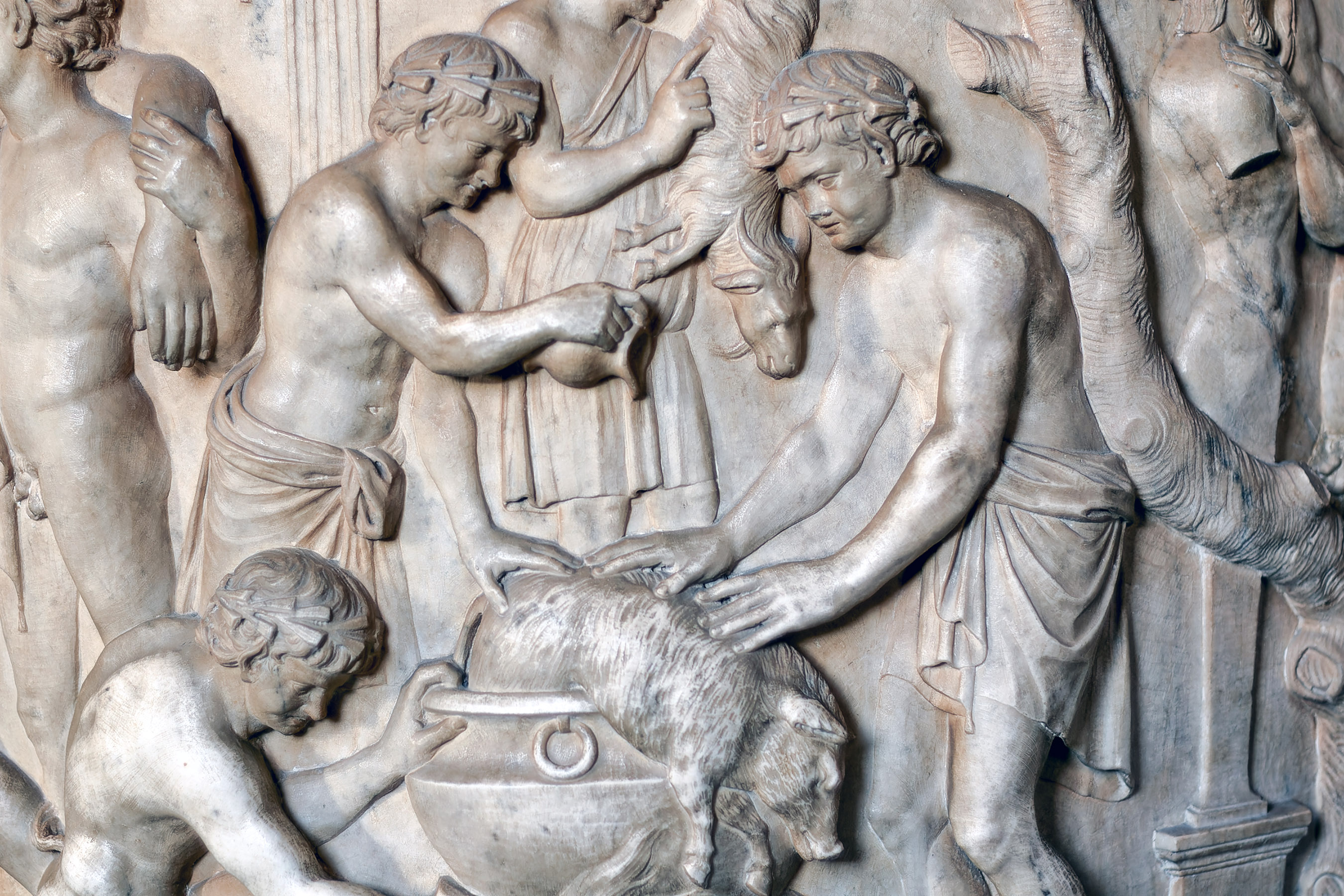
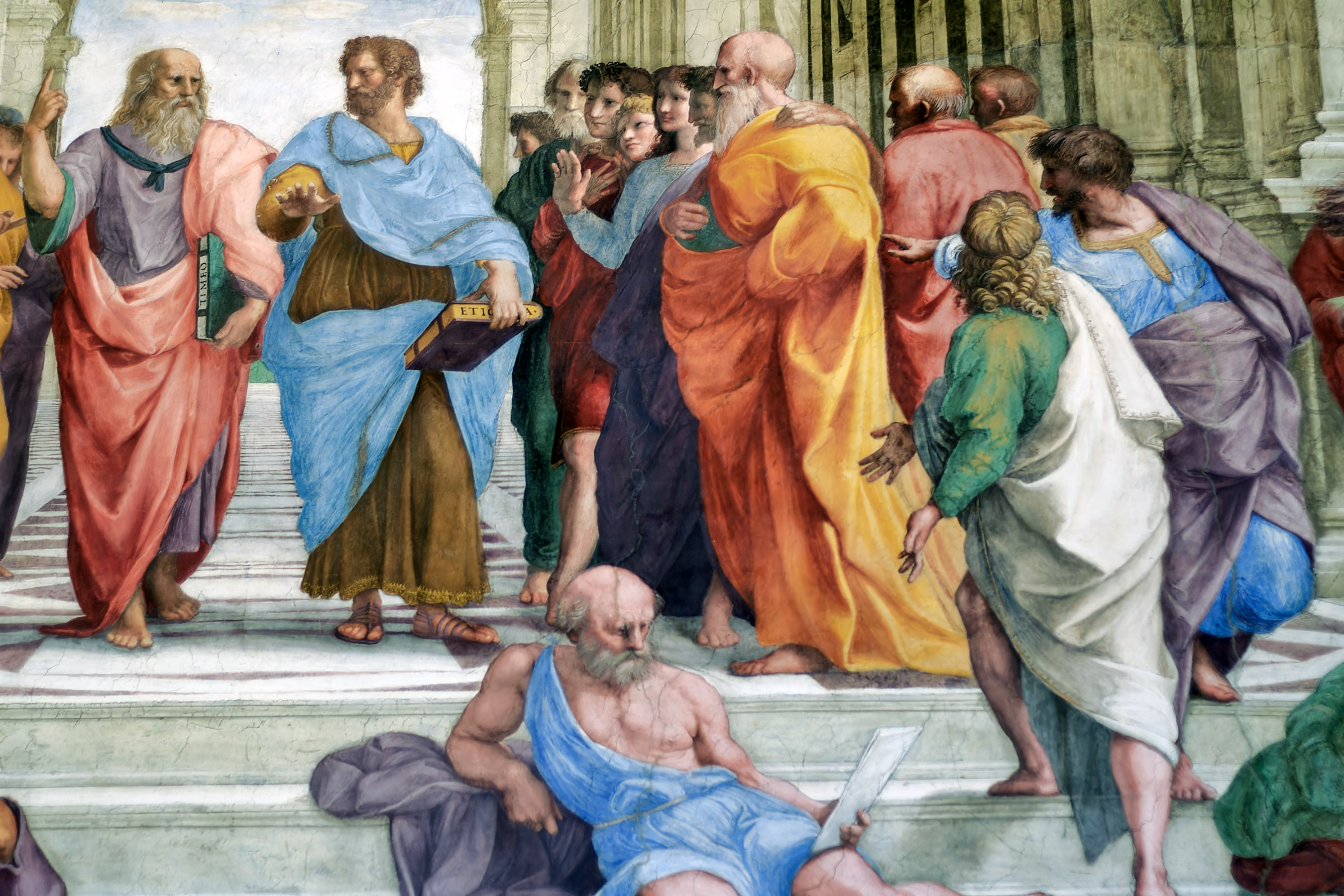
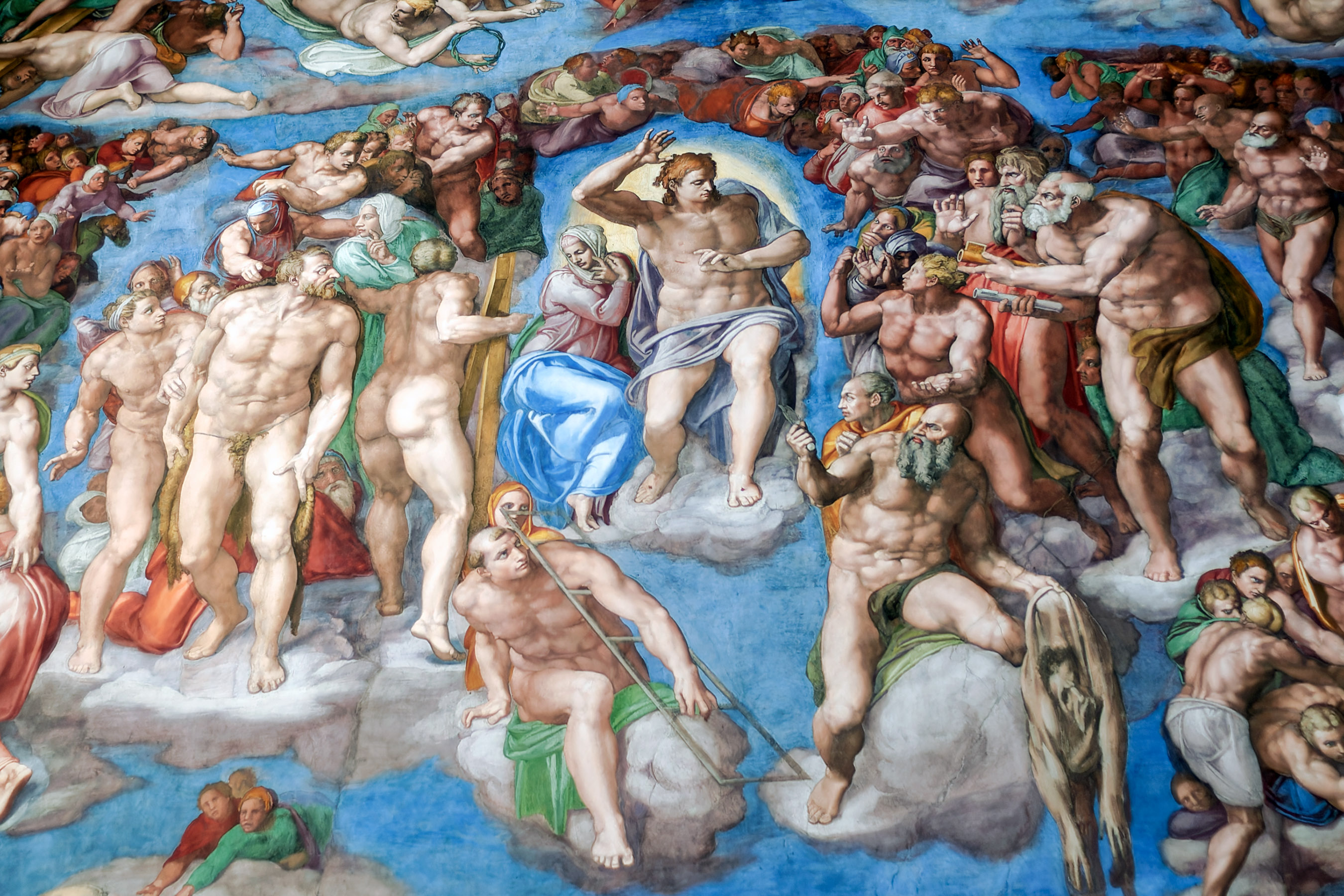
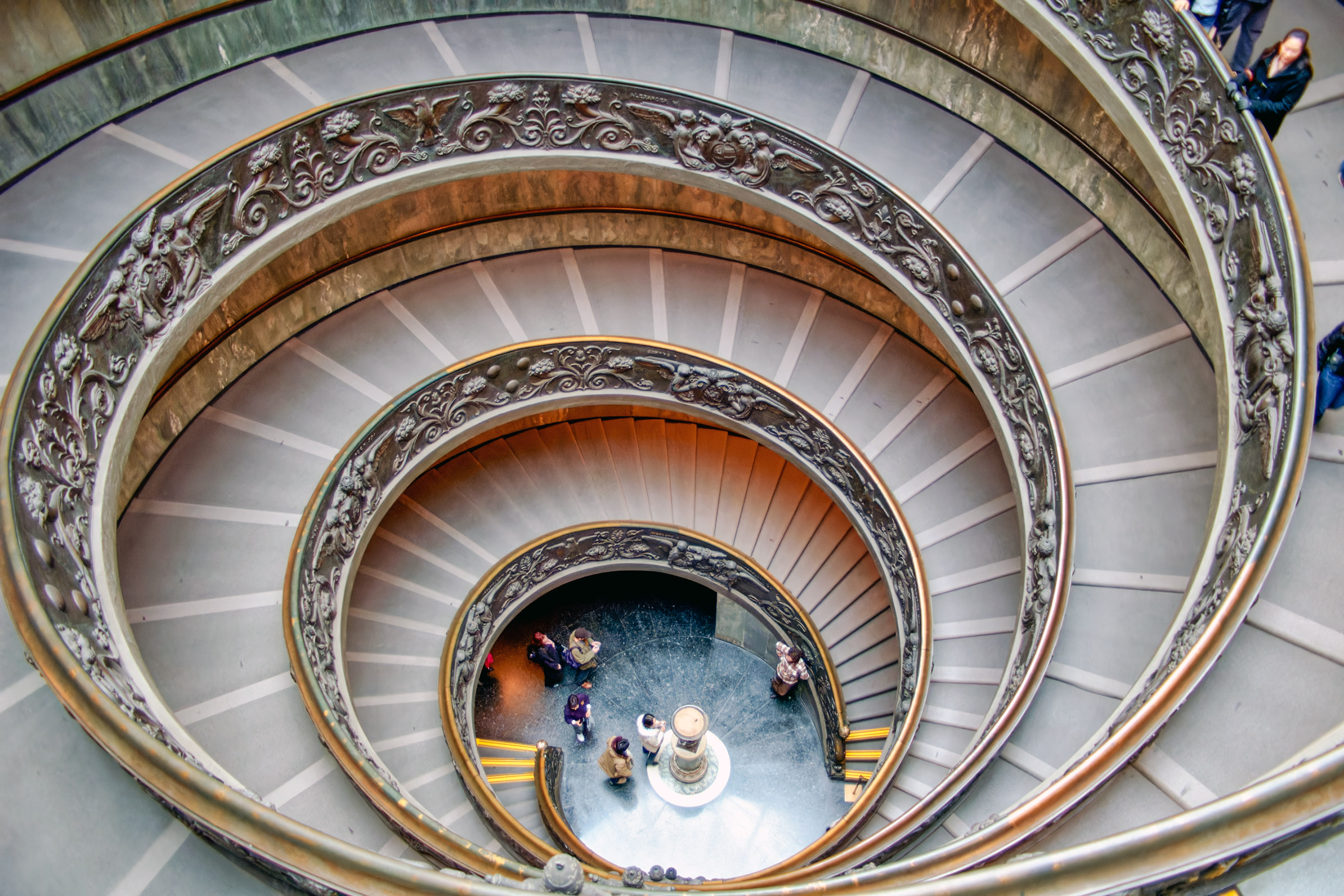
The following morning, we were finally able to get into the Vatican museum [29]. Our main interests were the stanze di Raffaello and the Sistine Chapel. Some of Raffaello's work was still being restored, but a few rooms were open to the public. This excerpt of La Scuola di Atene (The School of Athens) [30] shows the quality of the restoration work. The two figures on the left represent Plato (red toga) and Aristotle, while Diogenes is sitting on the steps. The Sistine Chapel is fully restored, but photography is strictly forbidden, with or without a flash. I did not realize this when I photographed this excerpt of Michelangelo's "The Last Judgment" [31] but I was quickly informed of the rules by two of the many staff members patrolling the area. We exited the museum by means of a circular staircase [32] that brings visitors back down to street level.
|
|
In the Vatican museum |
Part of Raffaello's Scuola di Atene |
|
|
Sistine Chapel: The Last Judgment |
Spiraling down to the exit |
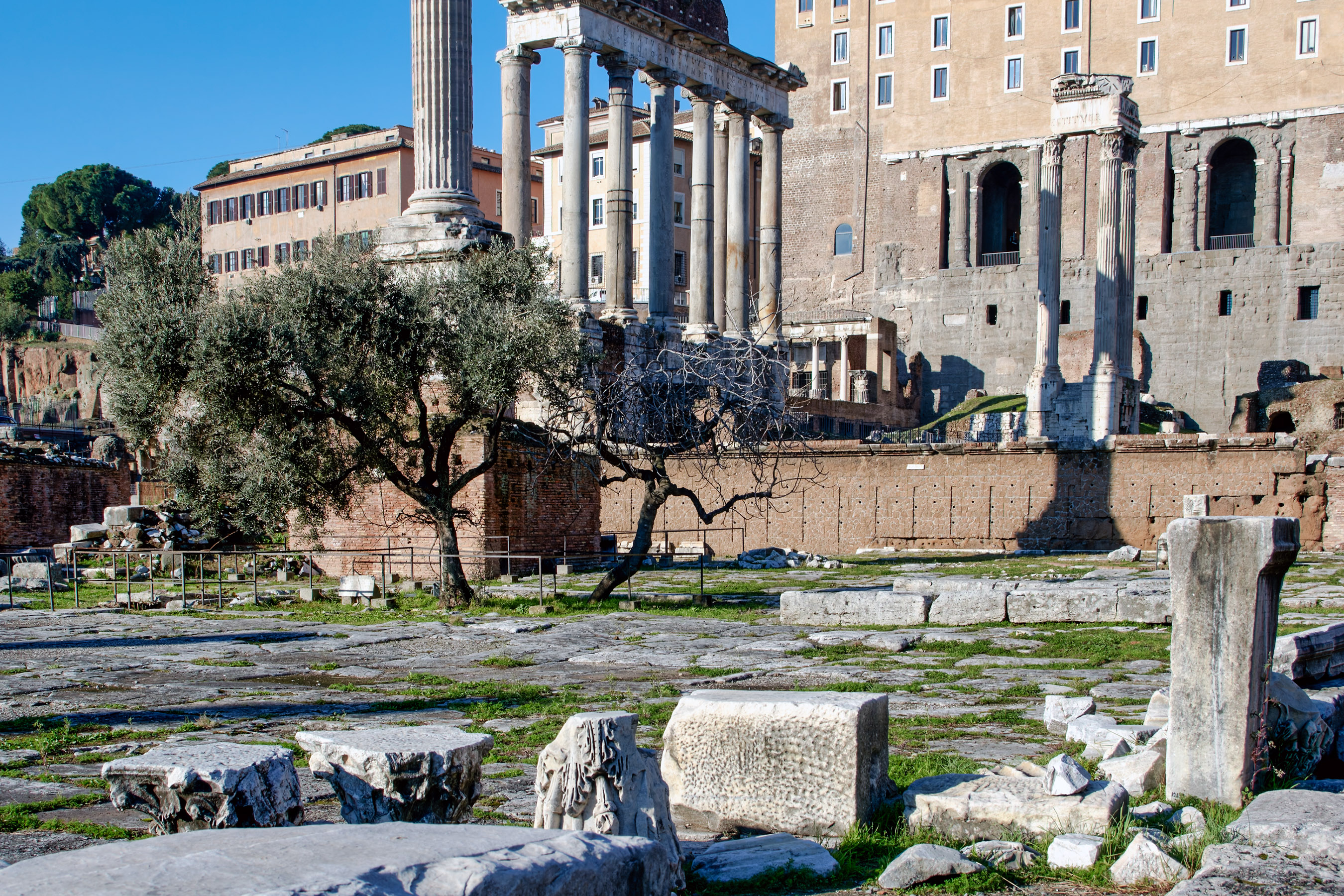
On Thursday, it was time for the Foro Romano. We began our visit at the Arch of Septimius Severus [33]. It was built in 203 A.D. to honor the emperor and his two sons, Caracalla and Geta, for their victory over the Parthians in what is northeastern Iran today. The arch is 23 meters (75 feet) high and 24.5 meters (80 feet) wide. Incidentally, when Septimius Severus died in 211 A.D., he was buried in Hadrian's mausoleum, known today as the Castel Sant' Angelo [23]. Next to the the Arch of Septimius Severus are the remains of the Temple of Saturn [34], the oldest one to have been built in the forum (construction started in 497 B.C.). The next image shows the temple from a different angle [35].
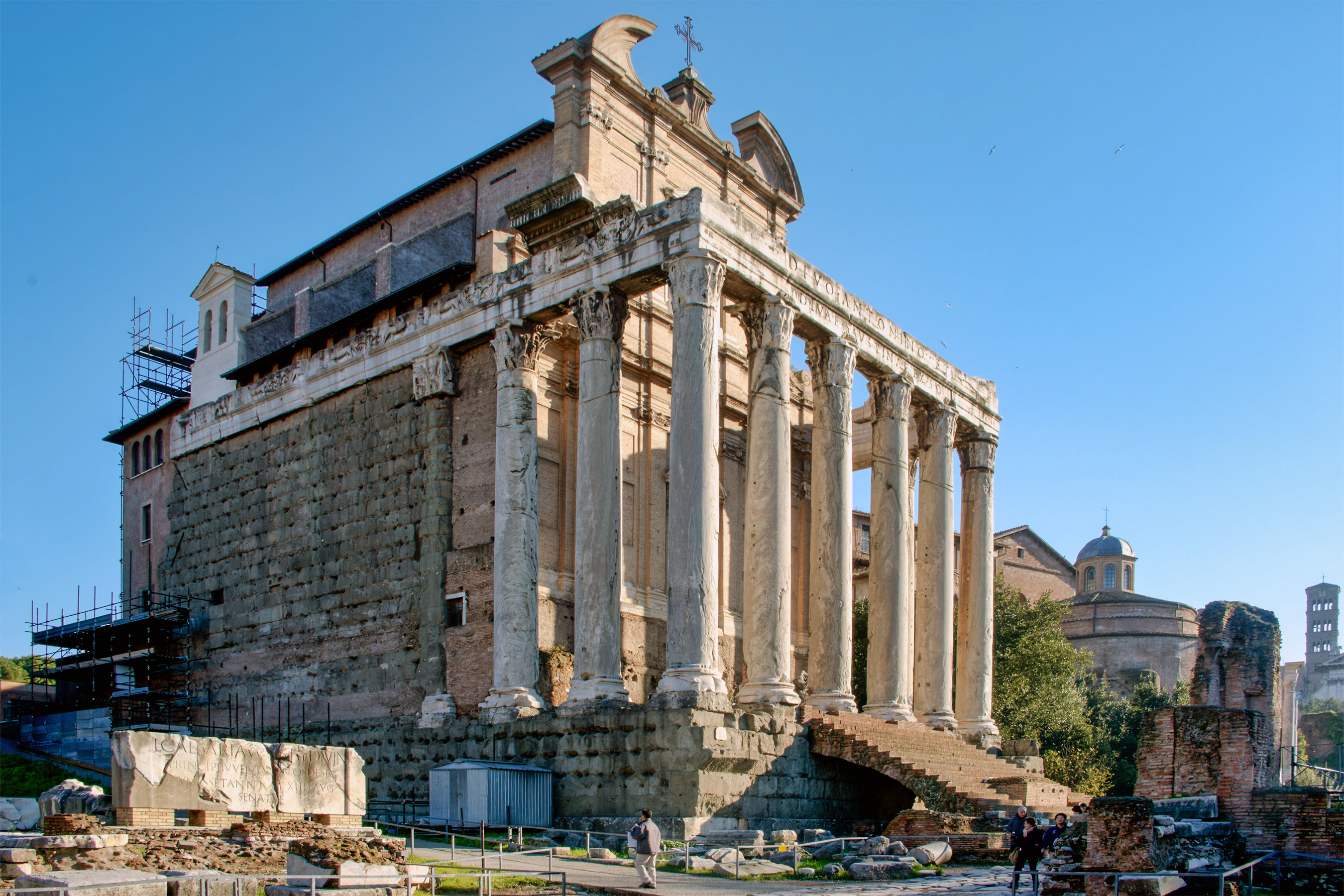
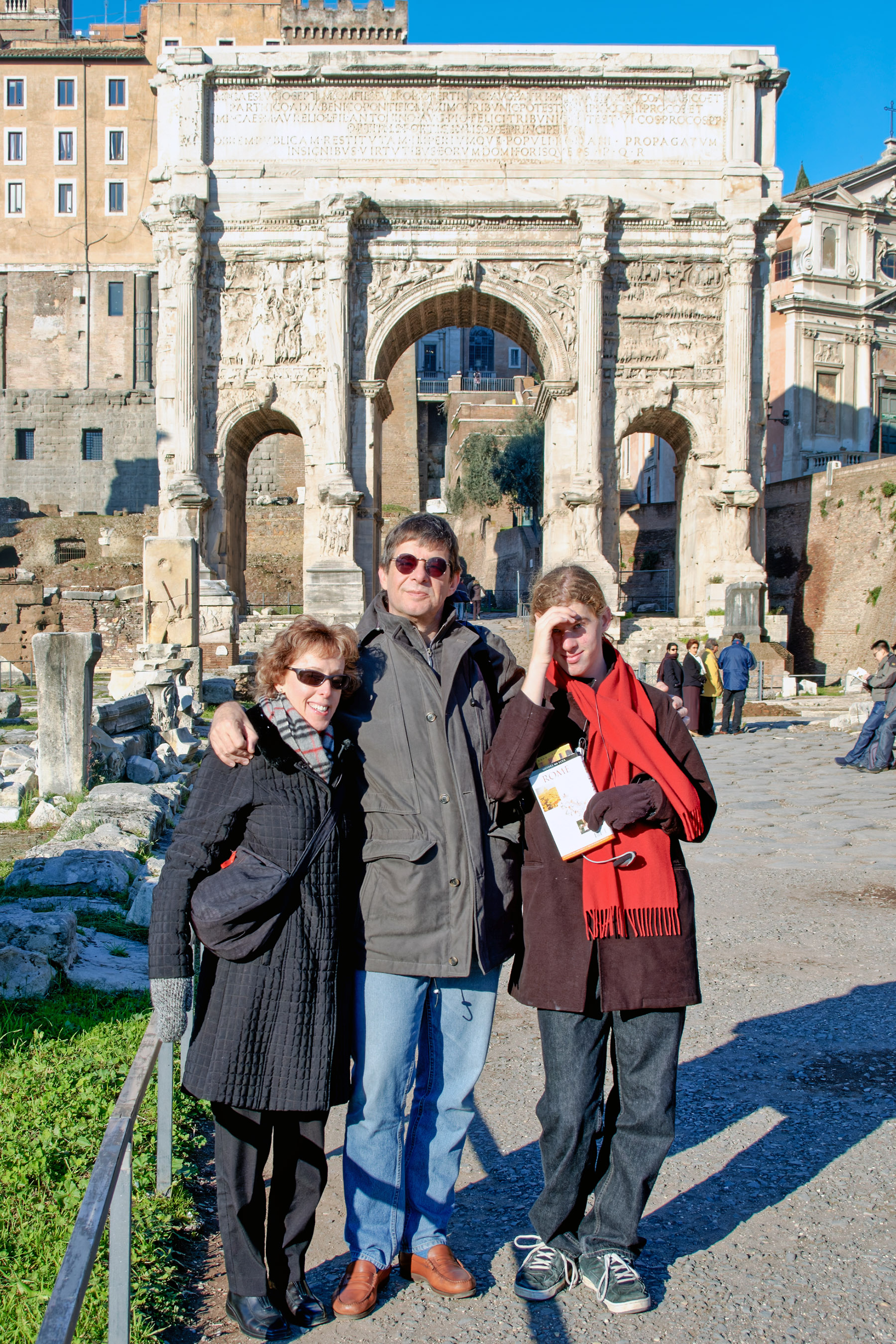
The Temple of Antoninus and Faustina [36] is a bit of a visual curiosity. It was originally built in 141 A.D. by the emperor Antonius to honor his deceased wife Faustina. In the 11th century, the temple was converted to a church which was rebuilt in the early 17th century. It is at that time that the baroque facade was added, giving the whole thing a somewhat incongruous appearance. David took the next photo of the rest of the family [37] before we moved on to what remains of the temple of Castor and Pollux [38] with its beautiful Corinthian columns. It was completed in 494 B.C., but the ruins visible today are from the temple that was rebuilt in 6 A.D. after the original had been completely destroyed by fire.

|

|
Arch of Septimius Severus |
Temple of Saturn |
|
|
Forum View |
Temple of Antoninus and Faustina |
|

|
Vicki, Daniel, and Eric |
Temple of Castor |
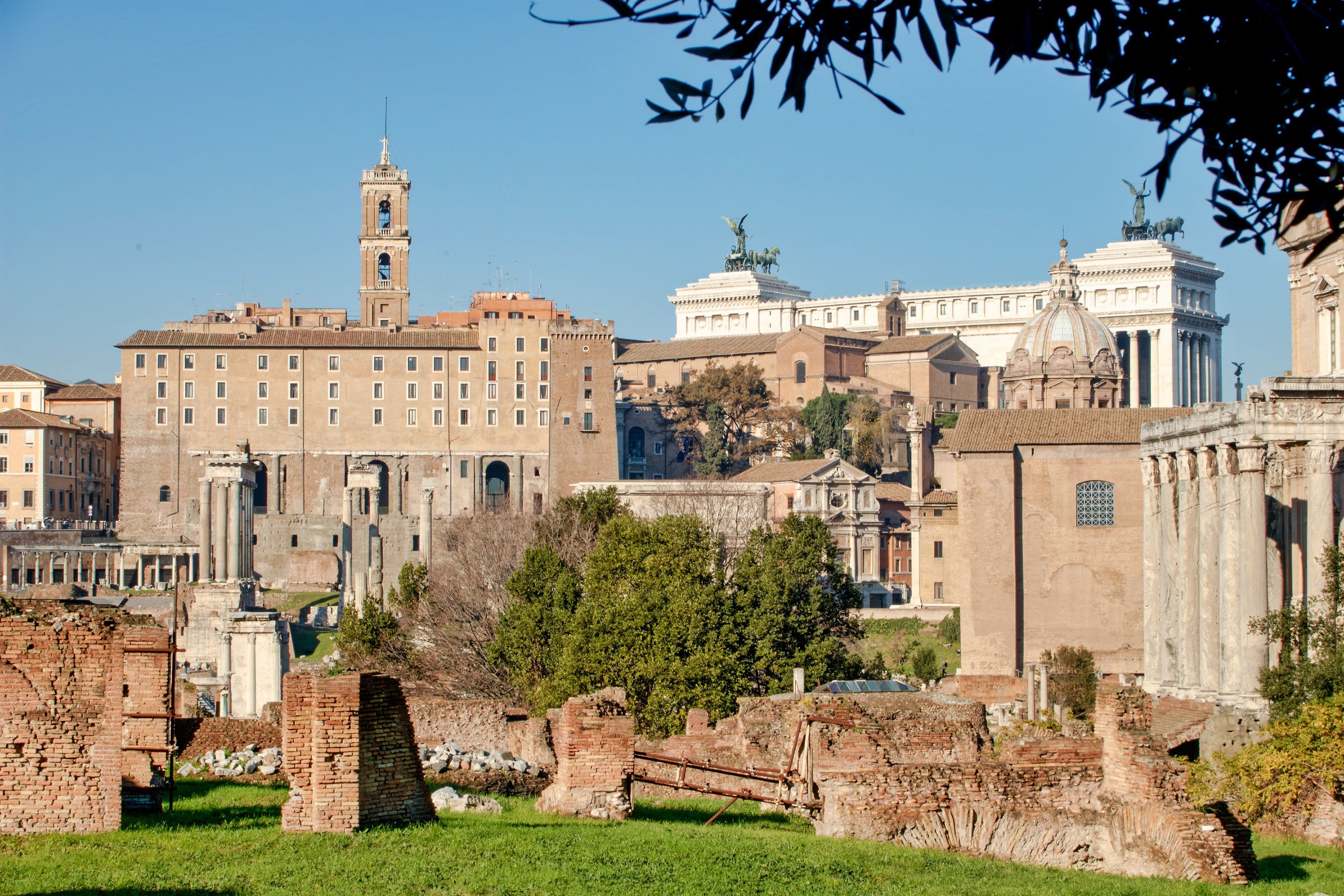
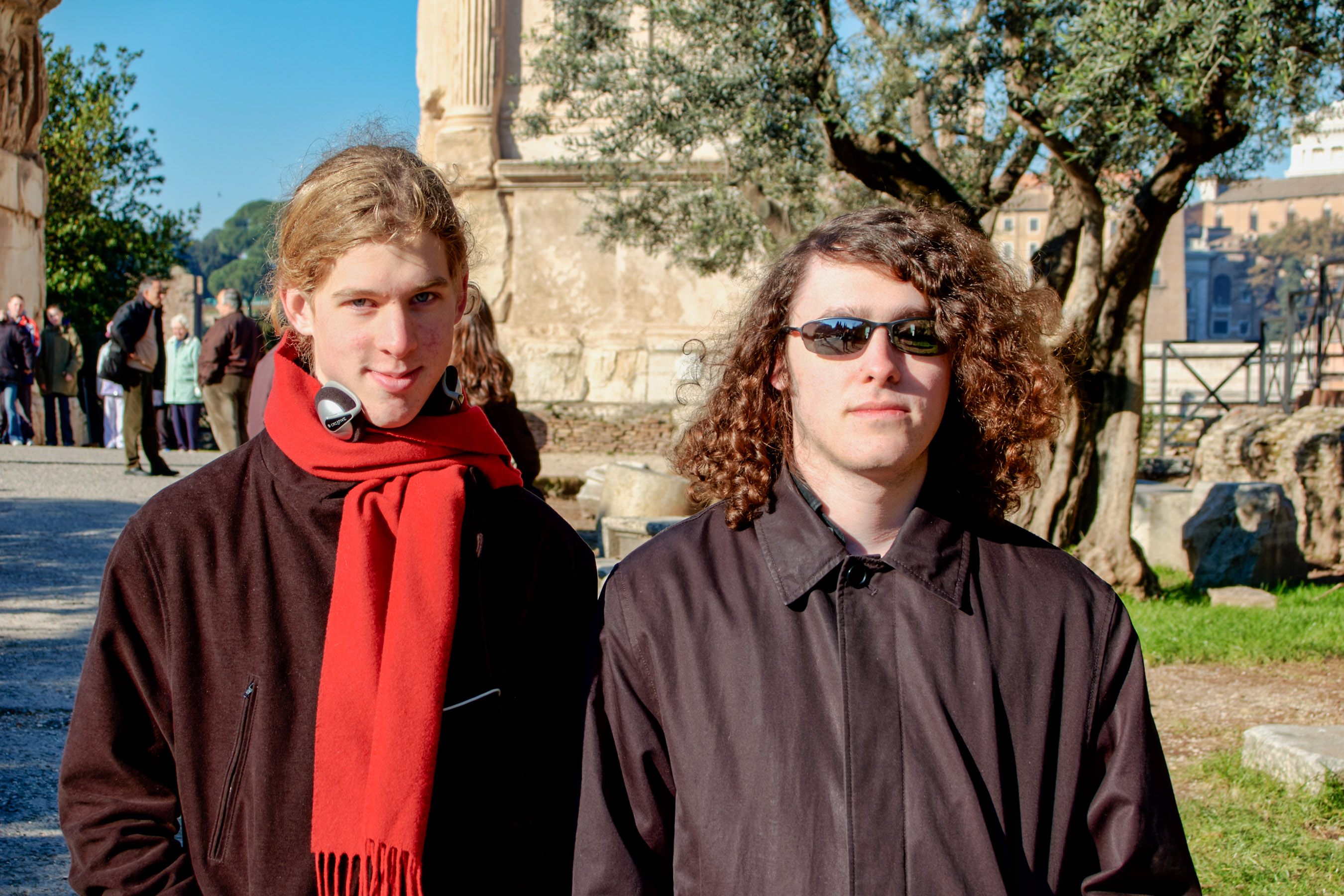
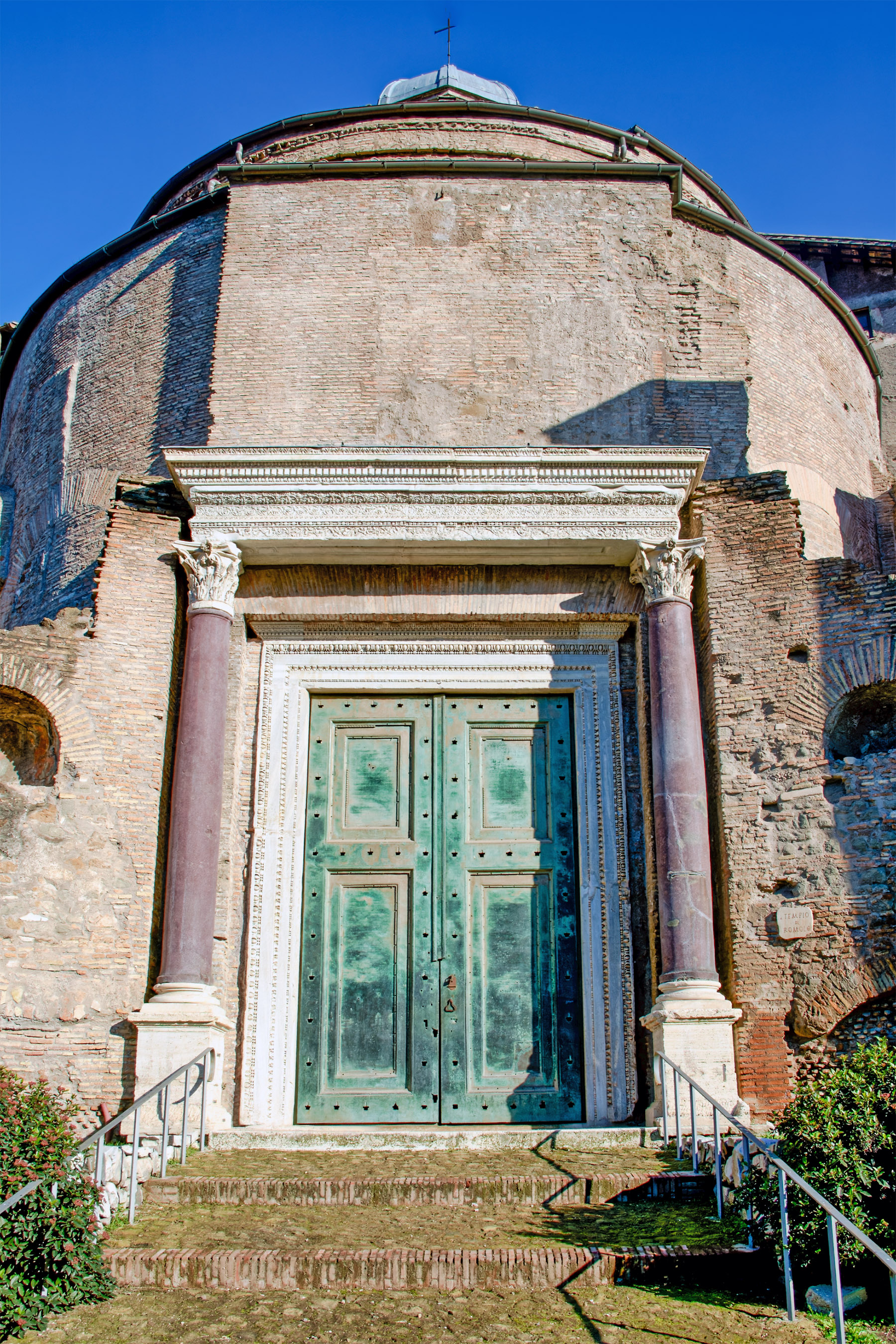
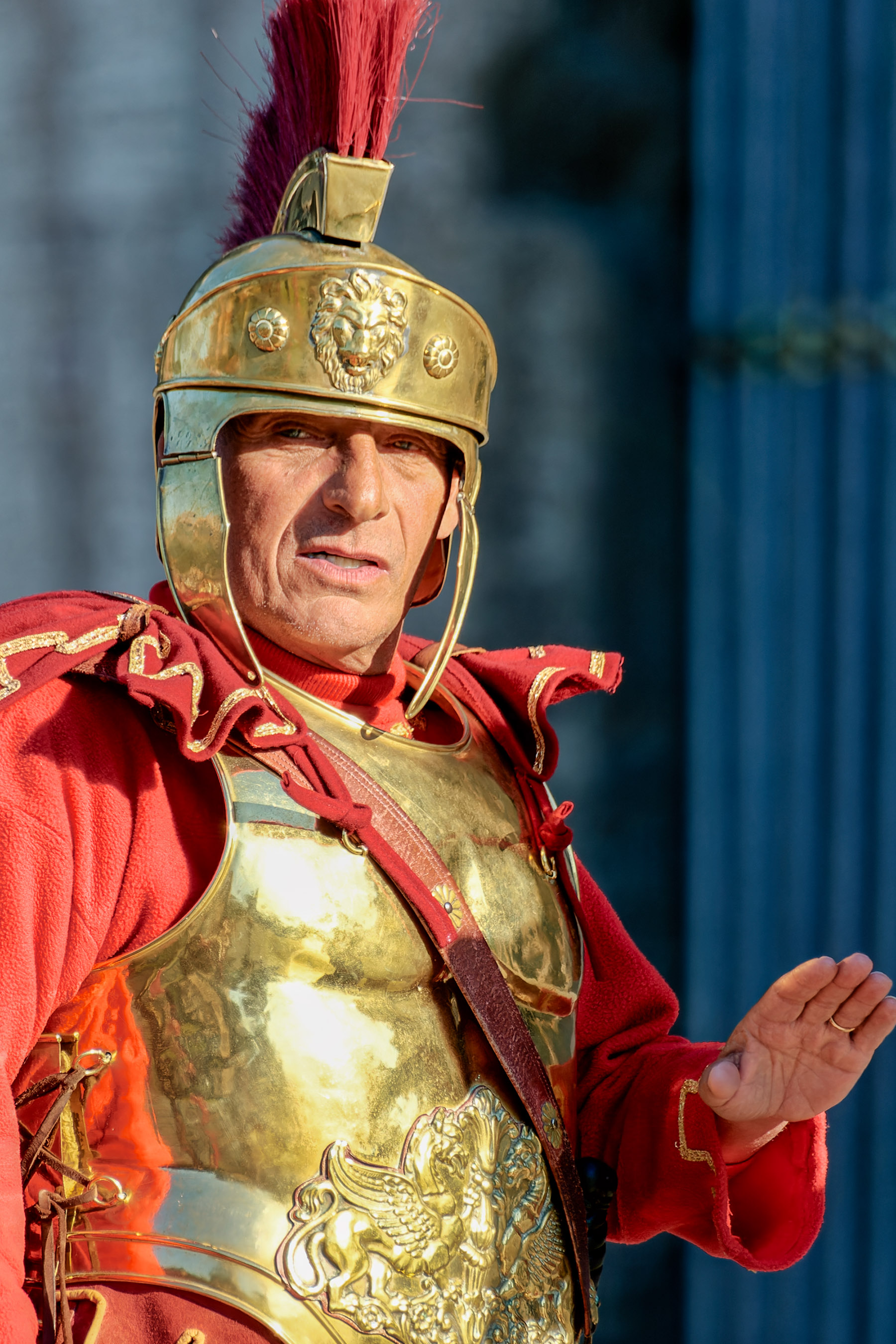
We spent quite a bit of time wandering around the Foro Romano [39], and we even managed to take an all too rare picture of Eric and David [40] before moving on to the Temple of Romulus, which was not built in honor of Rome's cofounder; rather, it is named for the son of its builder, the emperor Maxentius. The bronze doors on the little round temple [41] are said to be the oldest ones in the world still pivoting on their original hinges: they were mounted in 306 A.D. In several of Rome's tourist sites, one can see more or less authentic looking Roman legionnaires [42]; for a few euros, people can have their picture taken with them.
|
|
Forum View |
Eric and David |
|
|
Temple of Romulus |
Roman legionnaire |
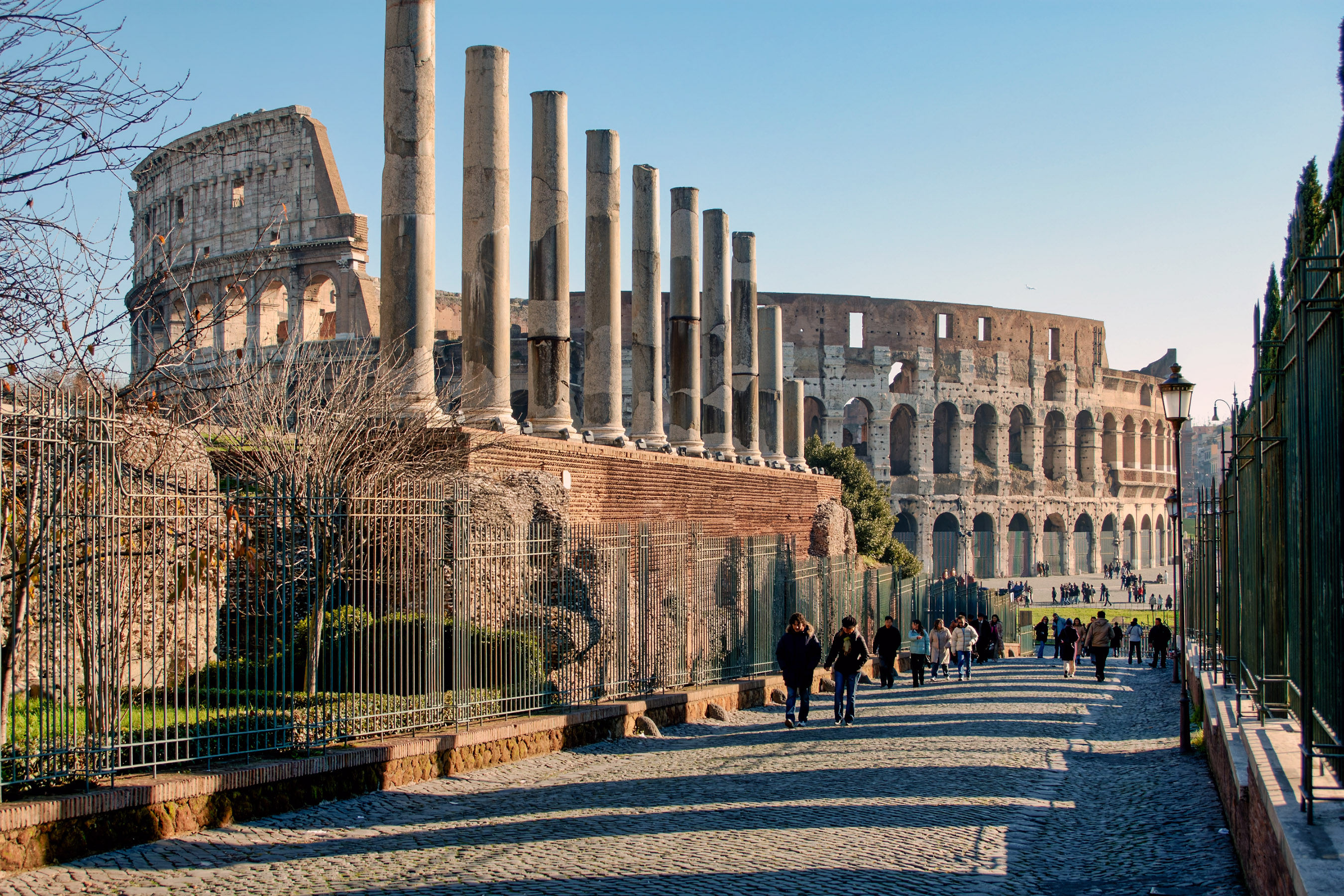
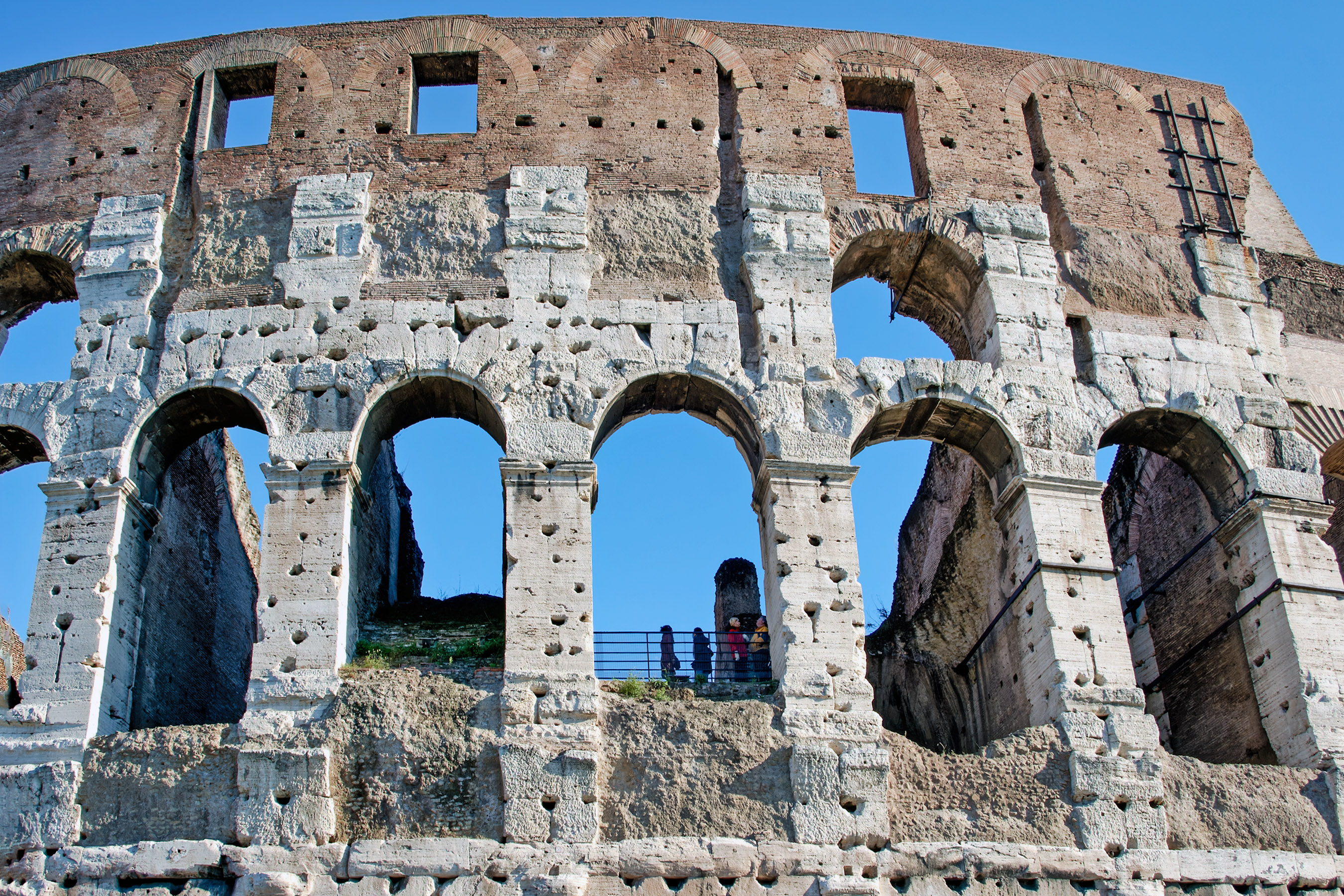
Exiting the forum on the other side, one approaches the Colosseum [43]. This huge theater was inaugurated in A.D. 80 and is assumed to have seated some 50,000 people. The portion of the facade shown here [44] was originally surrounded by a marble outer shell, most of which has been removed and used for other buildings over the centuries. The arena floor used to be made of masonry and wood which is missing today so that the complex structure below is plainly visible from within the Colosseum [45]. The seats were all made of travertine which is almost completely gone today. The Colosseum is truly enormous; the elliptical building has a surface area of nearly 2.5 hectares (6 acres) [46].
|
|
Walking towards the Colosseum |
Colosseum wall |
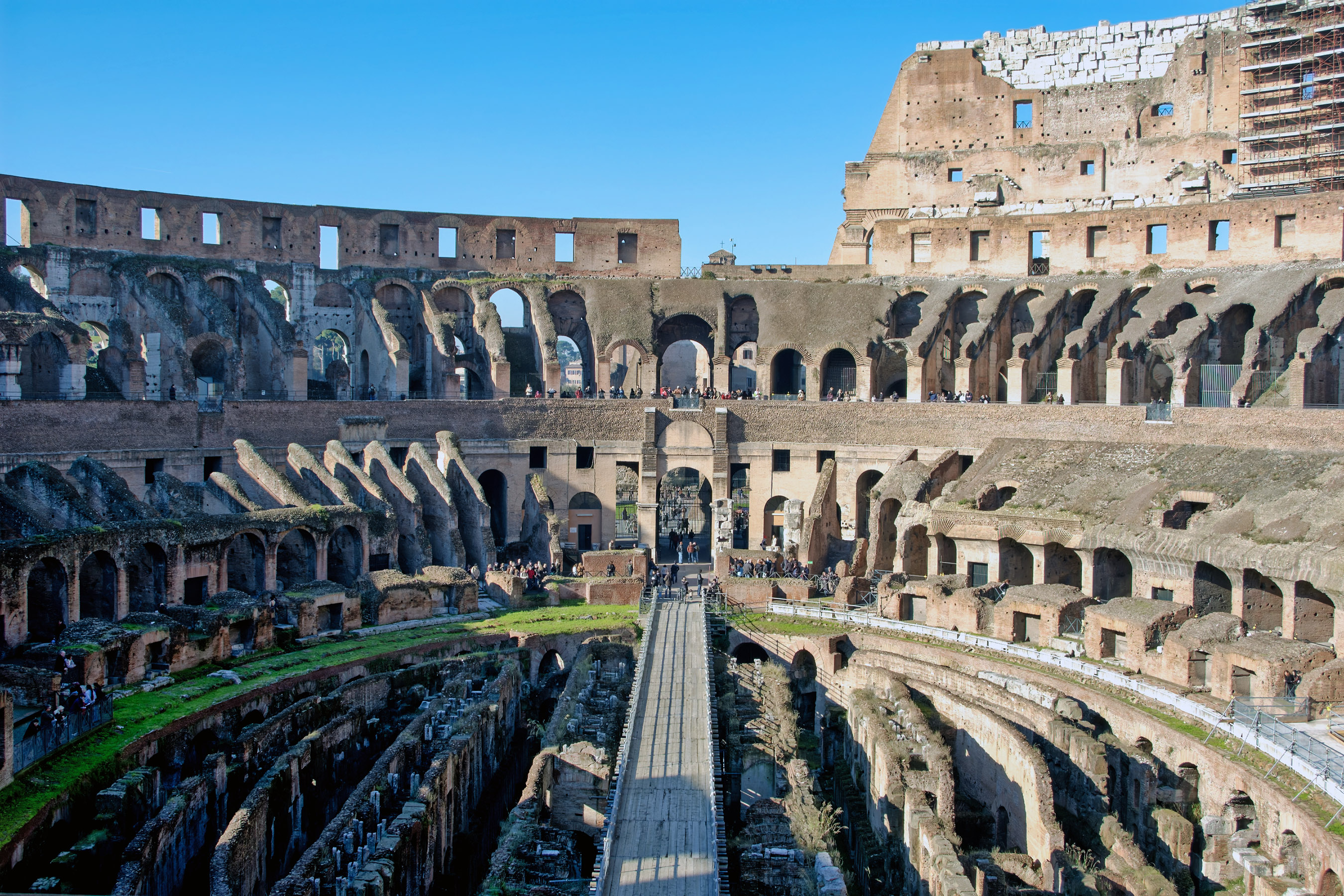
|
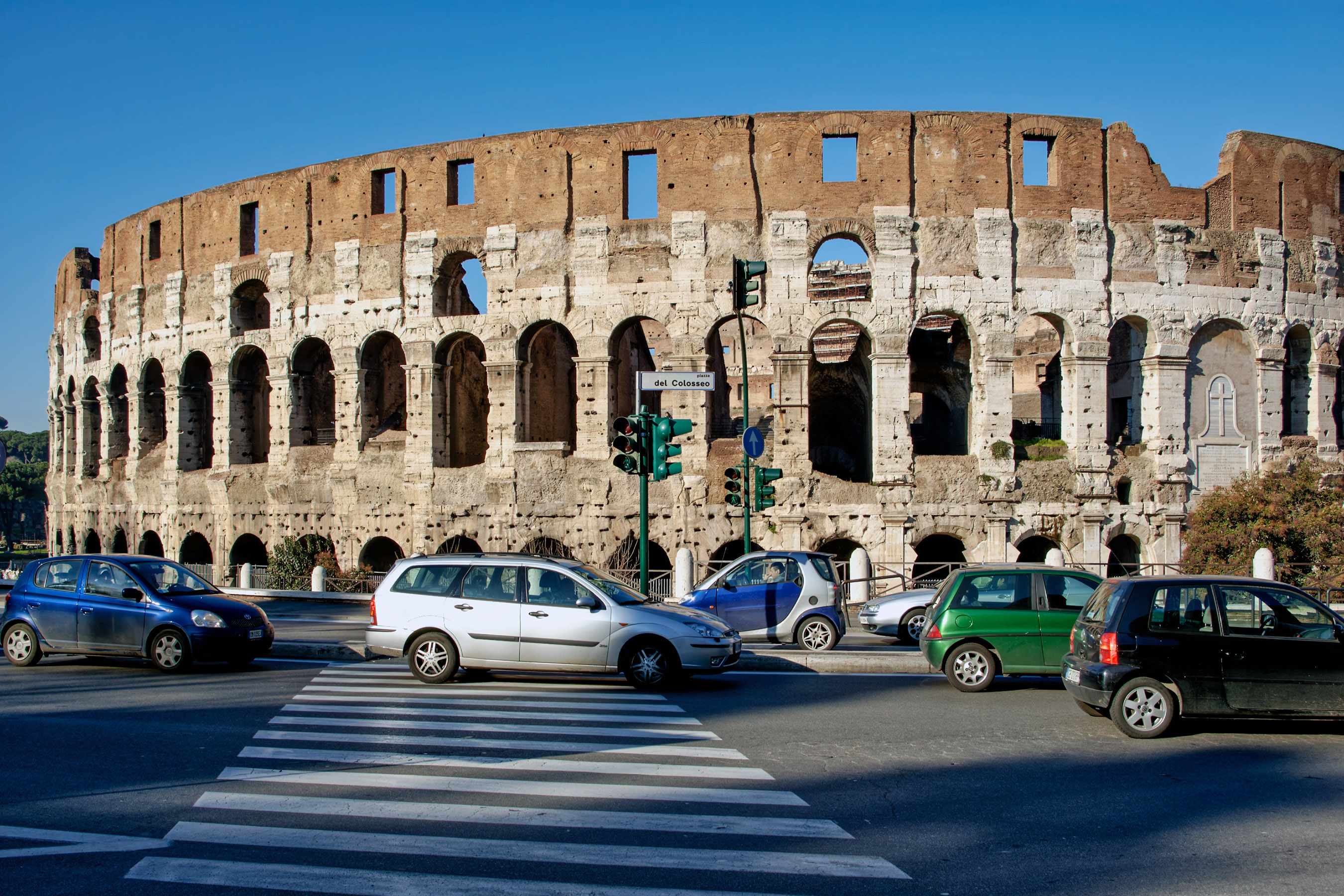
|
Inside the Colosseum |
Colosseum view |
These city trips are really a great deal of fun, though they can also be tiring because one tends to move about quite a bit. Still, we do hope that we managed to at least appear less worn out than this absolutely exhausted looking cat [47] we spotted as we left the Colosseum. We had a wonderful time in Rome, and with or without a coin in the Trevi fountain, we vowed to return someday. We also decided to keep doing these Christmas trips; in fact, we are already thinking about the next destination. In the meantime, we close this page with a photograph of the quickly fading daylight and pretty evening sky [48] in the piazza Venezia, just around the corner from our hotel. Arrivederci Roma!
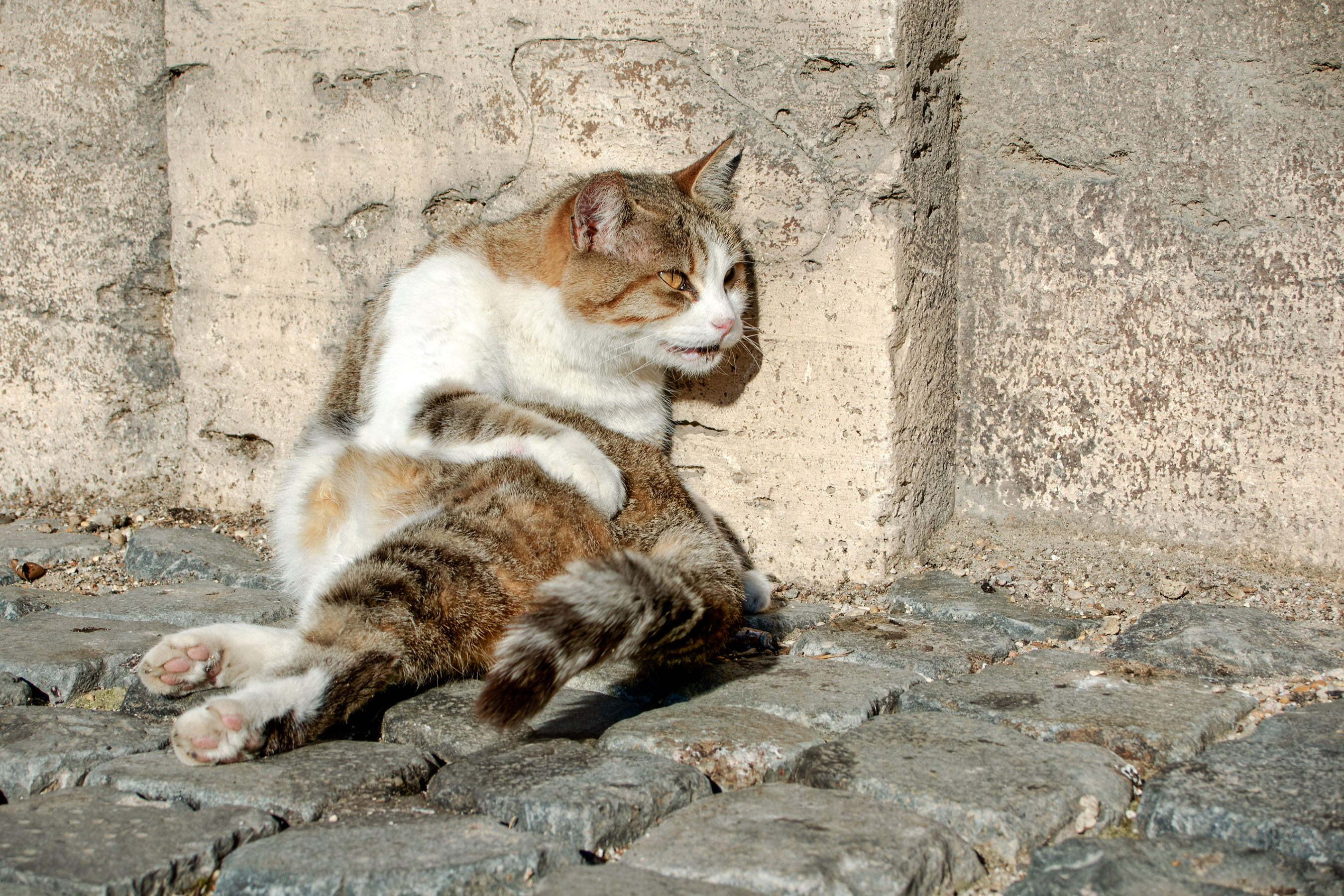
|
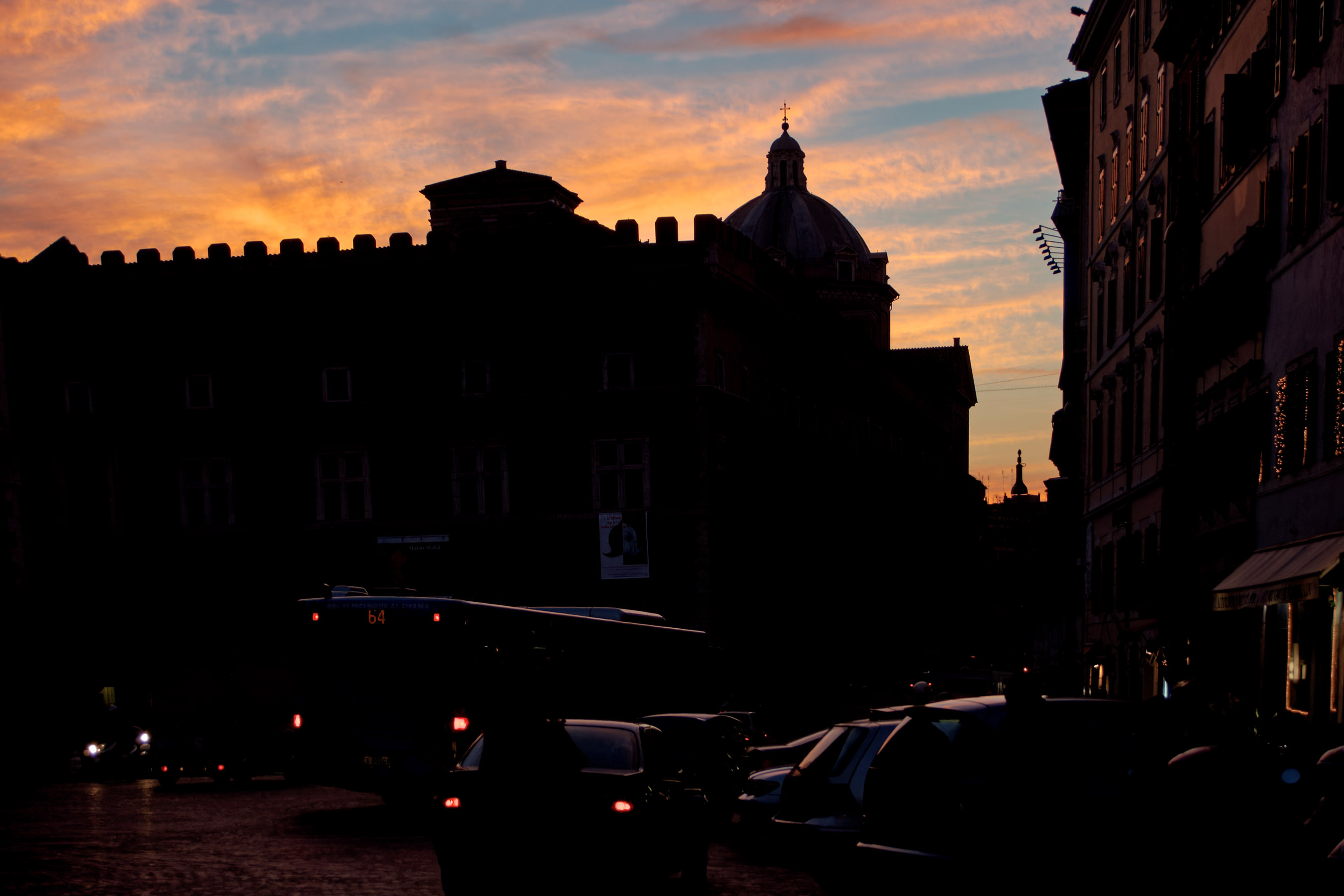
|
Exhausted Roman cat |
Remains of the day |
Home | Site Info | Family | The Area | Trips | France | Work | Rants | Photography | Odds & Ends
This page was last modified on December 27, 2006
Send feedback about this page to feedback@kiechle.com
https://www.kiechle.com/trips/romexmas/romexmas.htm
All contents © 1999-2023 The Kiechles